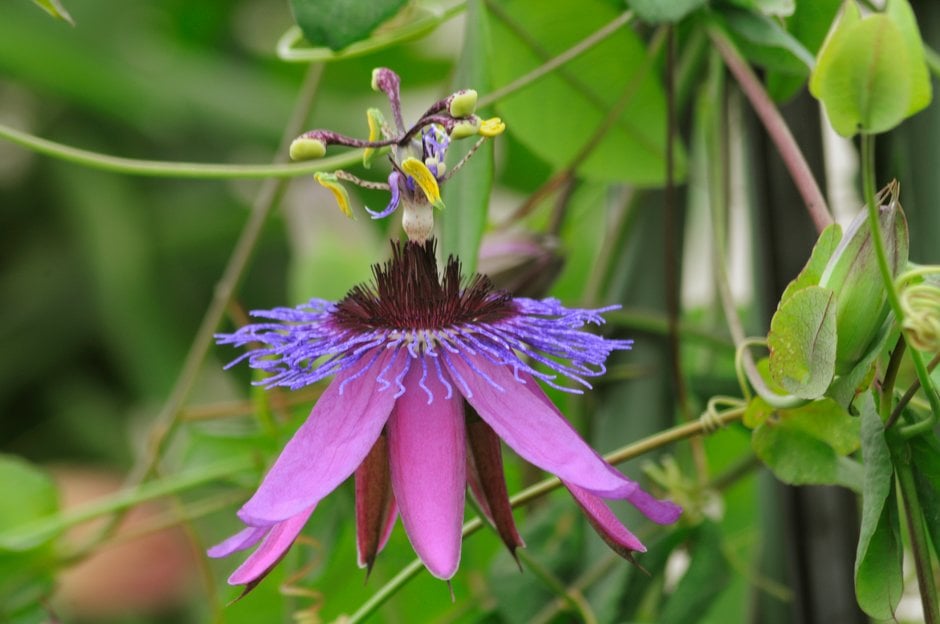
Passiflora 'La Morellina'

RHS Plant Profile
passion flower 'La Morellina'
passion flower 'La Morellina' RHS
Climber Wall Shrub

A vigorous, twining climber with semi-evergreen, lobed leaves. Flowers with reflexed purple petals and deeper purple to blue coronal filaments are borne from summer into early autumn and may be followed by orange-yellow fruits. The pulp in the fruits only can be eaten when they are fully ripe and yellow-orange. Unripe fruit and is toxic

Position

Full sun

Soil Types

Chalk, Clay, Loam, Sand

Max Height

4-8 metres

Max Spread

2.5-4 metres

Size

Time to Maturity
5–10 years
Max Spread
2.5-4 metres
Max Height
4-8 metres

Growing Conditions

Chalk Clay Loam Sand
Moisture
Moist but well–drained
pH
Acid or Alkaline or Neutral

Position

Full sun
Aspect
South–facing or West–facing
Exposure
Sheltered
Hardiness
H4

Colour & Scent

Season Stem Flower Foliage Fruit
Spring
Summer
Autumn
Winter

Botanical Details

Family
Passifloraceae
Native to GB/Ireland
No
Foliage
Semi evergreen
Habit
Climbing
Potentially harmful
Fruit are ornamental - not to be eaten. Wear gloves and other protective equipment when handling Pets: Fruit are ornamental - not to be eaten - see the HTA guide to potentially harmful plants for further information and useful contact numbers
Genus
Passiflora are mostly tender tendril-climbing shrubs, with simple or palmately-lobed, generally evergreen leaves and showy flowers of distinctive structure with often colourful coronal filaments, followed by conspicuous fruits, edible in some species
Name Status
Unresolved

How to Grow

Cultivation

Fast-growing climber for a warm position in a sunny and sheltered position; thrives in moist but well-drained soil. In cold areas, grow in a container and overwinter indoors

Propagation

Propagate by, semi-hardwood cuttings or by layering in spring or autumn

Suggested planting locations and garden types

  • City and courtyard gardens
  • Cottage and informal garden
  • Patio and container plants
  • Wall side borders

Diseases

May be susceptible to honey fungus (rarely) and a virus