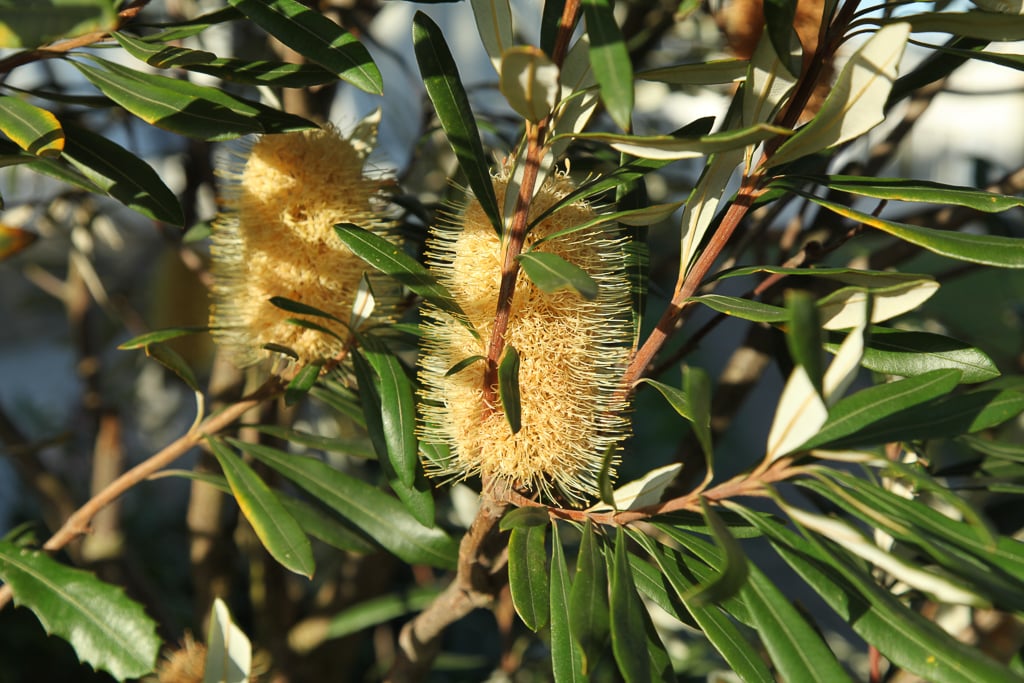
Banksia integrifolia subsp. monticola

RHS Plant Profile
white mountain banksia
white mountain banksia John Fielding
Shrubs Trees

An evergreen large shrub or small tree with long, narrow leaves that are green above and pale grey on the underside. Pale yellow, cylindrical flowers are produced in summer and autumn

Position

Full sun

Soil Types

Loam, Sand

Max Height

Higher than 12 metres

Max Spread

4-8 metres

Size

Time to Maturity
20–50 years
Max Spread
4-8 metres
Max Height
Higher than 12 metres

Growing Conditions

Loam Sand
Moisture
Well–drained
pH
Neutral or Acid

Position

Full sun
Aspect
South–facing or West–facing or East–facing
Exposure
Sheltered
Hardiness
H3

Colour & Scent

Season Stem Flower Foliage Fruit
Spring
Summer
Autumn
Winter

Botanical Details

Family
Proteaceae
Native to GB/Ireland
No
Foliage
Evergreen
Habit
Columnar upright
Genus
Banksia are evergreen shrubs and trees with leathery, often handsome, simple or pinnately lobed leaves and many small tubular flowers in dense spikes forming showy, cone-like heads, followed by woody fruiting clusters
Name Status
Correct
Plant Range
E Australia

How to Grow

Cultivation

Requires a free-draining soil in a sunny position. If grown in a container, use a peat-free, loam-based compost with added horticultural grit. Can survive outside in mild, sheltered gardens in the UK

Propagation

Propagate by seed sown in spring or by semi-ripe cuttings in summer

Suggested planting locations and garden types

  • City and courtyard gardens
  • Patio and container plants
  • Conservatory and greenhouse

Pruning

Pruning group 1

Pests

Generally pest-free but new growth may be susceptible to slugs and snails

Diseases

Generally disease-free