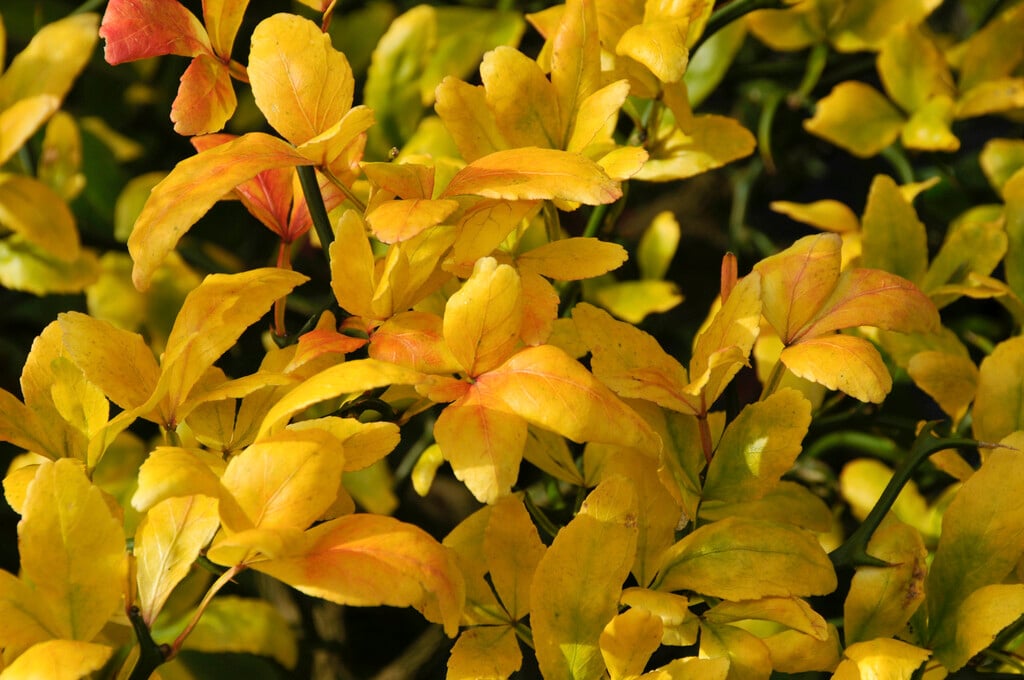
Citrus trifoliata 'Flying Dragon'

RHS Plant Profile
Japanese bitter orange 'Flying Dragon'
Japanese bitter orange 'Flying Dragon' visionspictures.com

Synonyms

Poncirus trifoliata 'Flying Dragon'

Shrubs Trees

A deciduous shrub reaching around 3m, with trifoliate green leaves that turn yellow in autumn. It is fast-growing and has long stout thorns - making it a suitable hedge plant. Plentiful fragrant white flowers open in spring before the leaves and develop into 5cm lemon-like fruits which remain on the plant after the leaves have fallen. The tangled green stems with curved thorns and yellow fruit look very ornamental in winter

Position

Full sun

Soil Types

Clay, Loam, Sand

Max Height

2.5-4 metres

Max Spread

1.5-2.5 metres

Size

Time to Maturity
5–10 years
Max Spread
1.5-2.5 metres
Max Height
2.5-4 metres

Growing Conditions

Clay Loam Sand
Moisture
Moist but well–drained
pH
Neutral or Acid

Position

Full sun
Aspect
East–facing or North–facing or South–facing or West–facing
Exposure
Sheltered
Hardiness
H6

Colour & Scent

Fragrance Flower
Season Stem Flower Foliage Fruit
Spring
Summer
Autumn
Winter

Botanical Details

Family
Rutaceae
Native to GB/Ireland
No
Foliage
Deciduous
Habit
Bushy, Spreading branched
Potentially harmful
Fruit harmful to skin with sunlight/skin allergen (lemon and lime-bearing Citrus only). Wear gloves and other protective equipment when handling
Genus
Citrus are typically evergreen shrubs or trees, frequently spiny, with simple, leathery, aromatic leaves, usually with winged stalks, and often fragrant white or pink-tinged flowers, followed by large, juicy fruits
Name Status
Accepted

How to Grow

Cultivation

Grow as a conservatory or greenhouse plant, in a container of peat-free, loam-based potting compost with added grit, in full light, with shade from hot sun. In growth during spring and summer, water freely, and mist daily. Apply fertilisers formulated for citrus, throughout the year, following the manufacturer’s instructions; water sparingly in winter. See citrus cultivation for further information

Propagation

Propagate from seed or by semi-ripe cuttings in summer

Suggested planting locations and garden types

  • Architectural
  • City and courtyard gardens
  • Hedging and screens

Pruning

Prunng group 1 or can be clipped to shape

Pests

Generally pest-free

Diseases

Generally disease-free