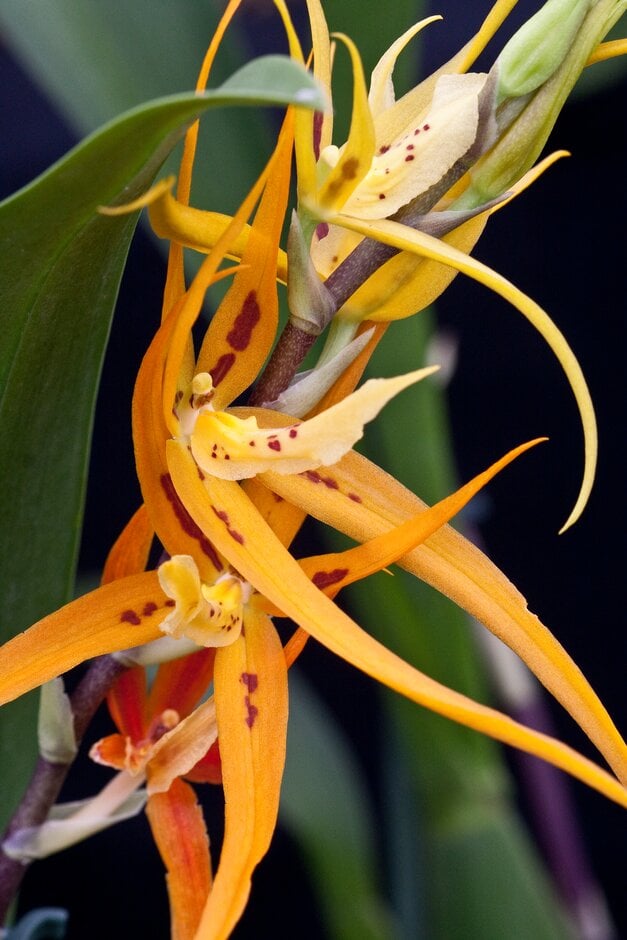
Brassia Orange Delight gx

<em>Brassia</em> Orange Delight gx RHS

Synonyms

× Brassada 'Orange Delight'

Houseplants Conservatory Greenhouse

Orange Delight' is a hybrid which produces thin, spiky dark yellow flowers with brown markings, fading to dark orange as the plant gets older. An easy-flowering variety which flowers from September to February

Position

Partial shade

Soil Types

Loam

Max Height

0.5-1 metres

Max Spread

0.5-1 metres

Size

Time to Maturity
2–5 years
Max Spread
0.5-1 metres
Max Height
0.5-1 metres

Growing Conditions

Loam
Moisture
Well–drained
pH
Acid or Alkaline or Neutral

Position

Partial shade
Aspect
East–facing or West–facing
Exposure
Sheltered
Hardiness
H1A

Colour & Scent

Season Stem Flower Foliage Fruit
Spring
Summer
Autumn
Winter

Botanical Details

Family
Orchidaceae
Native to GB/Ireland
No
Foliage
Evergreen
Habit
Columnar upright
Genus
Brassia are small to very large epiphytic orchids with ovoid to cylindrical pseudobulbs, each bearing 1-3 strap-shaped leaves and often showy flowers in racemes of up to 12 spider-like fragrant flowers from the bases of the pseudobulbs
Name Status
Accepted

How to Grow

Cultivation

Requires day temperatures of 18-29°C and a night minimum of 13°C in good, indirect light. Provide moist, partially shaded, well-ventilated conditions and water freely, applying fertiliser at every third watering and mist twice daily for high humidity; reduce watering in winter and cease watering if temperature falls below 11°C. Re-pot in epiphytic orchid compost every 2-3 years in spring when plant fills and overhangs the pot. See indoor orchid cultivation

Propagation

Divide plants with 3 fully grown pseudobulbs in each division at time of re-potting. Tease out roots carefully, only discarding the shrivelled ones.

Suggested planting locations and garden types

  • Sub-tropical

Pruning

No pruning required. Remove flower spikes after flowering is finished

Pests

May be susceptible to aphids, red spider mite and mealybugs

Diseases

Generally disease-free