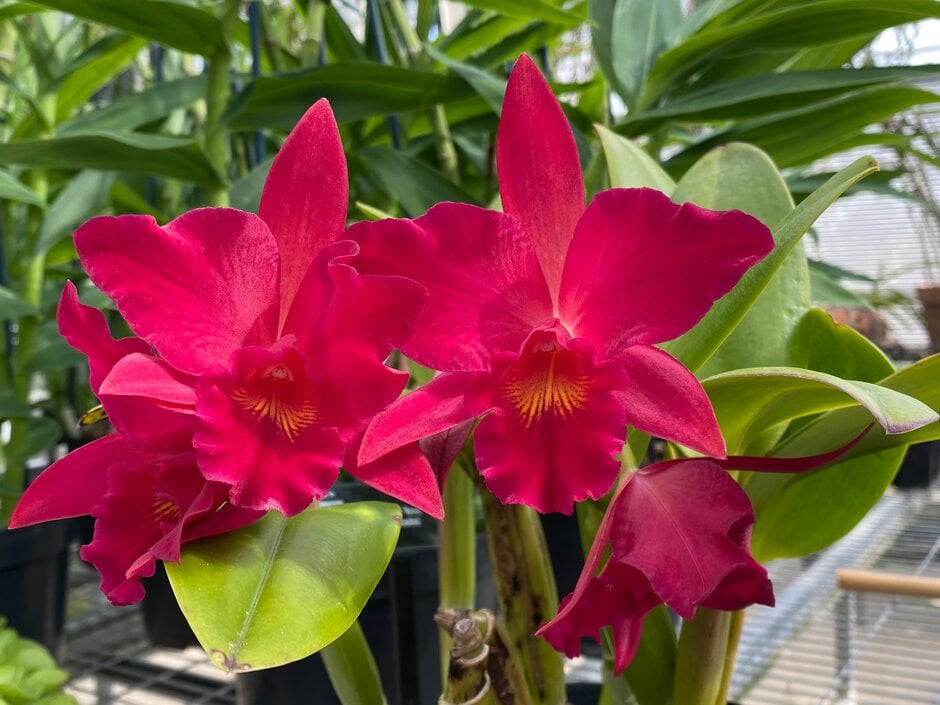
× Cattlianthe Jewel Box gx 'Scheherazade'

× <em>Cattlianthe</em> Jewel Box gx 'Scheherazade' Valeria Valkova

Synonyms

× Sophrolaeliocattleya Jewel Box gx 'Scheherazade'

Conservatory Greenhouse Houseplants

A tropical, epiphytic orchid producing a clump of upright, spindle-shaped, fleshy stems, which serve as the plants storage of water and energy. Each stems carries two opposite, evergreen, fleshy leaves which remain on the plant over couple of seasons. The leaves are oval to lance-shaped, approximately 15-20cm long and 5-7 cm wide. Striking, dark-red flowers emerge from the centre on the top of matured stems

Position

Full sun, Partial shade

Max Height

0.1-0.5 metres

Max Spread

0.1-0.5 metres

Size

Time to Maturity
5–10 years
Max Spread
0.1-0.5 metres
Max Height
0.1-0.5 metres

Growing Conditions

Moisture
Moist but well–drained or Well–drained
pH
Neutral

Position

Full sun Partial shade
Aspect
East–facing or South–facing or West–facing
Exposure
Exposed or Sheltered
Hardiness
H1A

Colour & Scent

Season Stem Flower Foliage Fruit
Spring
Summer
Autumn
Winter

Botanical Details

Family
Orchidaceae
Native to GB/Ireland
No
Foliage
Evergreen
Habit
Clump forming, Columnar upright
Genus
An orchid nothogenus (a genus which denotes a hybrid or a cross) for intergeneric hybrid greges (plural of grex) containing at least one ancestor species from each of the two ancestral genera Cattleya and Guarianthe, and from no other genera
Name Status
Accepted

How to Grow

Cultivation

Grow in an open, coarse bark-based orchid mix with addition of perlite and coconut chips. Provide bright light conditions, but shade from hot, direct mid-day sun. Ideal temperatures are 15°C minimum in winter and up to maximum 28 °C during summer day. Water and feed plants regularly during the growing season. Ensure that all water drains away, preventing the plant sitting too wet. Provide enough humidity by regular misting. Reduce watering and feeding in winter months and keep in a bright, sunny position. As with many orchids, they grow best when well-established and slightly pot-bound. Re-potting should be only done if the plant overgrows its container or before the potting mix starts to deteriorate - approximately once in 2-3 years. The plant should only be re-potted when the new growth appears in spring. See also indoor orchid cultivation

Propagation

Mature plants may be divided when the plant overgrows its container. Each division should have at least 3 older growths with a sufficient amount of stored energy and water, to support new growth and reduce stress after repotting

Suggested planting locations and garden types

  • Houseplants
  • Conservatory and greenhouse

Pruning

No pruning required

Pests

May be susceptible to glasshouse red spider mite, scale insects and mealybugs. Thrips may cause damage on flowers

Diseases

Generally disease-free. Poor air movement may cause bacterial or fungal rots. Good hygiene practice and sterilising cutting tools prevent the spread of virus diseases