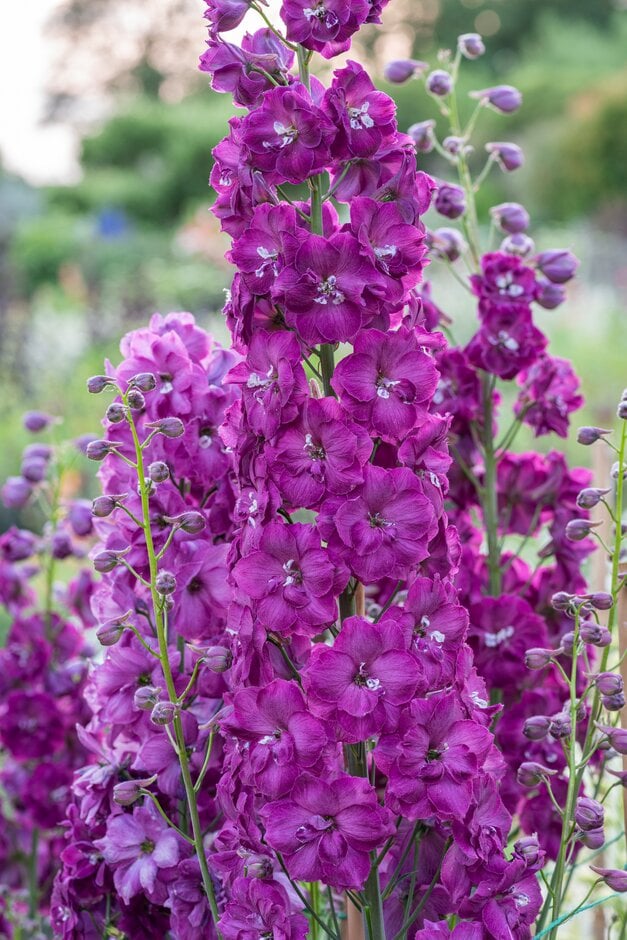
Delphinium 'Ruby Wedding'

RHS Plant Profile
delphinium 'Ruby Wedding'
delphinium 'Ruby Wedding' RHS
Herbaceous Perennial

An upright, clump-forming deciduous herbaceous perennial with green divided foliage and sturdy upright stems which produce racemes of dark pink-purple flowers with a white eye in the summer

Position

Full sun

Soil Types

Chalk, Loam, Sand

Max Height

0.5-1 metres

Max Spread

0.5-1 metres

Size

Time to Maturity
2–5 years
Max Spread
0.5-1 metres
Max Height
0.5-1 metres

Growing Conditions

Chalk Loam Sand
Moisture
Moist but well–drained
pH
Acid or Alkaline or Neutral

Position

Full sun
Aspect
South–facing or West–facing
Exposure
Sheltered
Hardiness
H6

Colour & Scent

Season Stem Flower Foliage Fruit
Spring
Summer
Autumn
Winter

Botanical Details

Family
Ranunculaceae
Native to GB/Ireland
No
Foliage
Deciduous
Habit
Clump forming, Columnar upright
Potentially harmful
Humans/Pets: Harmful if eaten. Wear gloves and other protective equipment when handling. For further information and contact numbers regarding pets, see the HTA guide to potentially harmful plants
Genus
Delphinium can be annuals, biennials or perennials, with palmately lobed basal leaves and showy bowl-shaped flowers in spikes, racemes or panicles
Name Status
Accepted

How to Grow

Cultivation

Grow in a fertile, well-drained but moisture-retentive soil in full sun, in a position sheltered from strong winds, and provide stakes or other supports. See staking perennials and delphinium cultivation for further advice

Propagation

Propagate by basal softwood cuttings in spring, or by division in early spring or early autumn

Suggested planting locations and garden types

  • City and courtyard gardens
  • Cottage and informal garden
  • Cut flowers
  • Flower borders and beds

Pruning

No pruning required except deadheading, cutting spent flower spikes back to flowering sideshoots, and cutting all growth down to ground level at the end of the growing season

Pests

May be susceptible to aphids, earwigs, delphinium leaf miner, delphinium moth caterpillars, slugs and snails