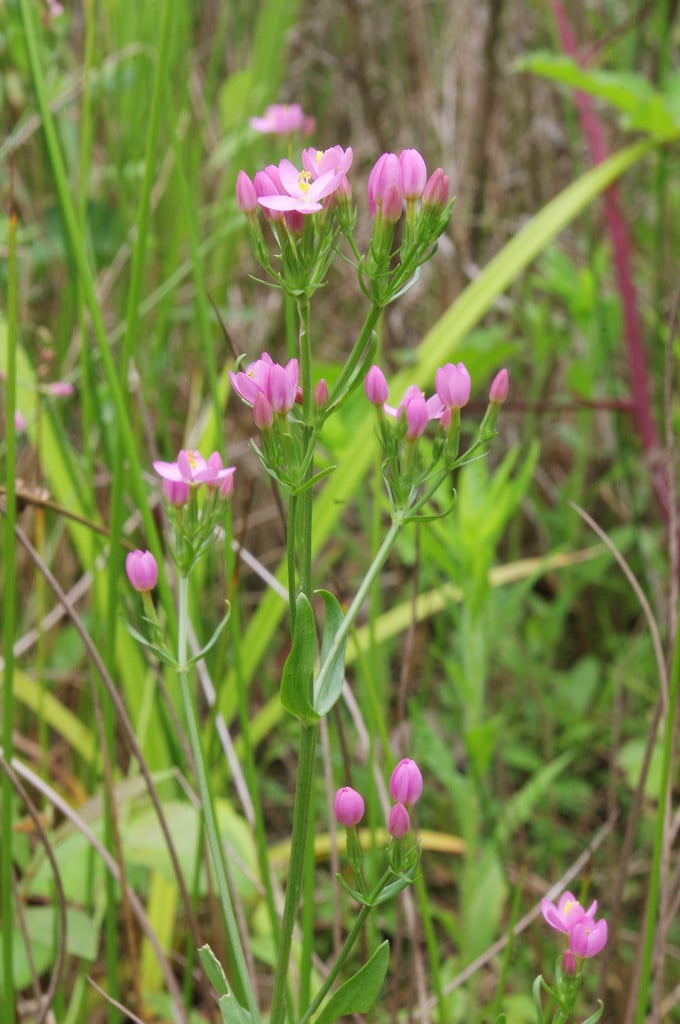
Centaurium erythraea

RHS Plant Profile
common centaury
common centaury RHS

Other common names

bitter herb, bloodwort, Christ's ladder, earth gall, feverwort, bustl y ddaear

Synonyms

Centaurium erythraea umbellatum
Centaurium minus
Erythraea centaurium misapplied
Centaurium umbellatum

Plants for pollinators
Annual Biennial

Common centaury is a biennial, sometimes annual, hairless plant that forms basal rosettes and has oval, veined leaves. Flowers are borne in terminal clusters or onside shoots in June to September. They are pale pink, tubular and open to five lobes

Position

Full sun

Soil Types

Chalk, Loam, Sand

Max Height

0.1-0.5 metres

Max Spread

0-0.1 metre

Size

Time to Maturity
1–2 years
Max Spread
0-0.1 metre
Max Height
0.1-0.5 metres

Growing Conditions

Chalk Loam Sand
Moisture
Poorly–drained
pH
Alkaline or Neutral

Position

Full sun
Aspect
East–facing or South–facing or West–facing
Exposure
Sheltered
Hardiness
H4

Colour & Scent

Season Stem Flower Foliage Fruit
Spring
Summer
Autumn
Winter

Botanical Details

Family
Gentianaceae
Native to GB/Ireland
Yes
Foliage
Deciduous
Habit
Bushy
Genus
Name Status
Correct
Plant Range
Eurasia

How to Grow

Cultivation

Naturally occurs in dry or well-draining, grassy places such as chalk down land and sand dunes

Propagation

Propagate by seed

Suggested planting locations and garden types

  • Wildlife gardens
  • Wildflower meadow

Pruning

No pruning required

Pests

Generally pest-free

Diseases

Generally disease-free