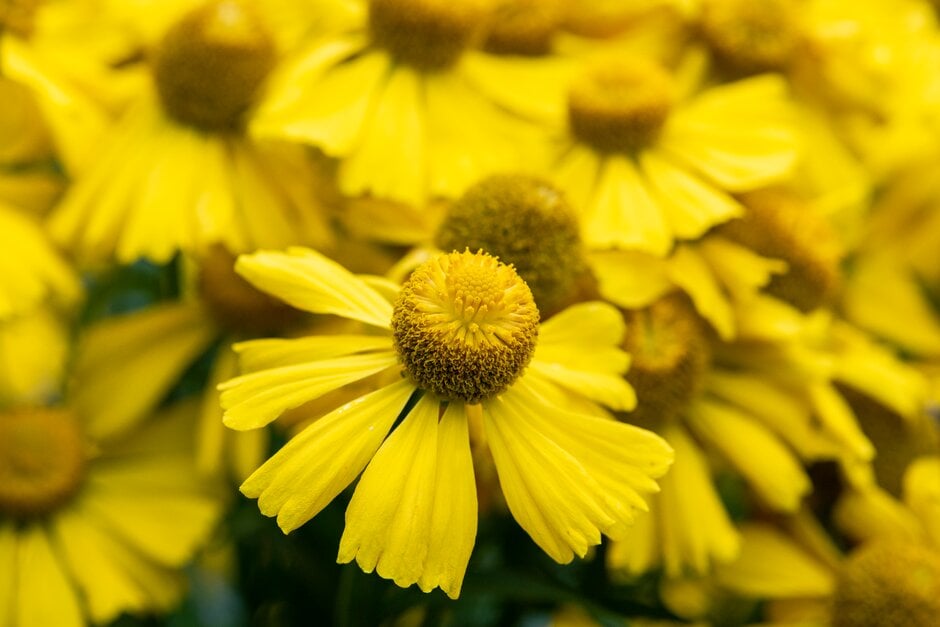
Helenium autumnale

RHS Plant Profile
autumn sneezeweed
autumn sneezeweed RHS

Other common names

autumn Helen flower, autumn sneezewort, dog fennel, smooth Helen flower, swamp sunflower, yellow star, ox eye, sneezeweed

Plants for pollinators
Herbaceous Perennial

An upright, clump-forming perennial up to 1.5m or more high, with branched stems and ovate to lance-shaped green leaves, 10-15cm long, and flowers 5-7cm across with dark brown discs (yellow in the wild) surrounded by bright yellow rays, which bend downwards as the disc-florets open, from late summer to autumn; the flowers provide pollen for bees and nectar for bees and other insects

Position

Full sun

Soil Types

Chalk, Clay, Loam, Sand

Max Height

1-1.5 metres

Max Spread

0.1-0.5 metres

Size

Time to Maturity
2–5 years
Max Spread
0.1-0.5 metres
Max Height
1-1.5 metres

Growing Conditions

Chalk Clay Loam Sand
Moisture
Moist but well–drained
pH
Acid or Alkaline or Neutral

Position

Full sun
Aspect
East–facing or South–facing or West–facing
Exposure
Sheltered
Hardiness
H7

Colour & Scent

Season Stem Flower Foliage Fruit
Spring
Summer
Autumn
Winter

Botanical Details

Family
Asteraceae
Native to GB/Ireland
No
Foliage
Deciduous
Habit
Clump forming
Genus
Helenium may be upright, clump-forming annuals, biennials or herbaceous perennials with simple leaves and showy daisy-like flower-heads over a long period
Name Status
Correct
Plant Range
Americas

How to Grow

Cultivation

Grow in full sun in fertile, moisture-retentive, humus-rich soil, and provide support for the tall stems; divide every two to three years to maintain vigour

Propagation

Propagate by seed in spring, by division in autumn or spring, or by basal softwood cuttings in containers in a cold frame in spring

Suggested planting locations and garden types

  • Wildlife gardens
  • Cottage and informal garden
  • Prairie planting
  • Flower borders and beds
  • Cut flowers

Pruning

No pruning required, but deadheading will prolong flowering

Pests

Generally pest-free

Diseases

Generally disease-free, but may be susceptible to leaf spot