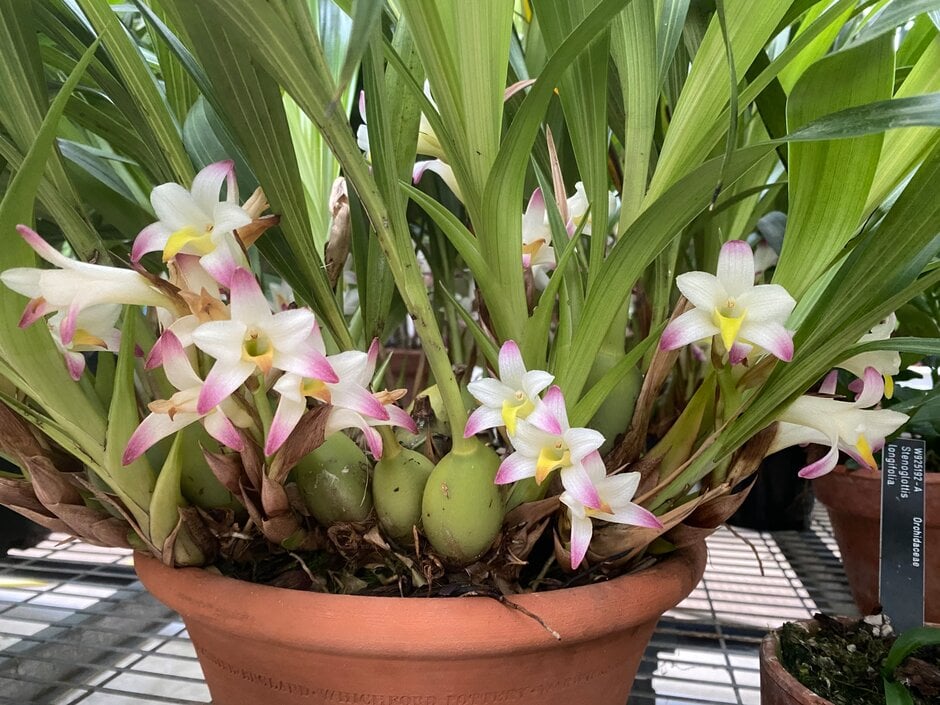
Coelia bella
A medium-sized, evergreen orchid up to 70 cm tall. The plant produces a clump of round, egg-shaped, green pseudobulbs (storage organs for water and nutrients). Each mature pseudobulb is approximately 5cm tall and carries three to five, lance-shaped, bright-green, glossy leaves. The leaves are 30-60 cm long and 2-4 cm wide and last on the plant for couple of years. Short flowering stems up to 15cm long emerge from the base of plant in winter and carry up to 6 trumpet-shaped, scented flowers. Each flower measures 5-7cm across and has a pleasant, sweet scent resembling marzipan. The flowers are white with pink or purple tips and yellow lip

Size
Ultimate height
0.1–0.5 metresTime to ultimate height
5–10 yearsUltimate spread
0.1–0.5 metresGrowing conditions
Moisture
Moist but well–drained, Well–drainedpH
NeutralColour & scent
| Stem | Flower | Foliage | Fruit | |
| Spring | Green | |||
|---|---|---|---|---|
| Summer | Green | |||
| Autumn | Green | |||
| Winter | Pink Purple White Yellow | Green |
Position
- Partial shade
Aspect
East–facing or North–facing or South–facing or West–facing
Exposure
Sheltered Hardiness
H1BBotanical details
- Family
- Orchidaceae
- Native to GB / Ireland
- No
- Foliage
- Evergreen
- Habit
- Clump forming, Columnar upright
- Name status
Correct
How to grow
Cultivation
Grow in an open, free-draining, bark-based orchid mix. Provide enough bright filtered light, but keep away from direct sunlight or a heating source. Ideal temperatures are around 13 °C minimum at night and up to maximum 24 °C during the day. Water with soft water (ideally rainwater) when the pot feels light when lifted. Ensure that all water drains away, preventing the plant from sitting wet. Orchid fertiliser can be applied regularly throughout the growing season. Reduce watering and feeding in winter months. The orchid will naturally produce rhizomes with aerial roots growing outside the pot. As with many orchids, they grow best when well-established and slightly pot-bound. Re-potting should be only done if the plant overgrows its container or before the potting mix starts to deteriorate - approximately once in 2-3 years. See indoor orchid cultivation for more tips.
Propagation
Propagation by seed is only possible in a controlled laboratory environment. Well-estastiblished plants can be propagated by division. Ensure each division has young enough, mature pseudobulbs to support new growth. See indoor orchid cultivation for further advice
Suggested planting locations and garden types
- Houseplants
- Conservatory and greenhouse
Pruning
No pruning required other than removing spent flower stems
Pests
May be susceptible to scale insect, aphids and mealybugs. Thrips can cause damage on flowers and developing flower buds
Diseases
Generally disease-free. Poor air movement may cause bacterial or fungal rots. Good hygiene practice and sterilising cutting tools prevent the spread of virus diseases
Get involved
The Royal Horticultural Society is the UK’s leading gardening charity. We aim to enrich everyone’s life through plants, and make the UK a greener and more beautiful place.