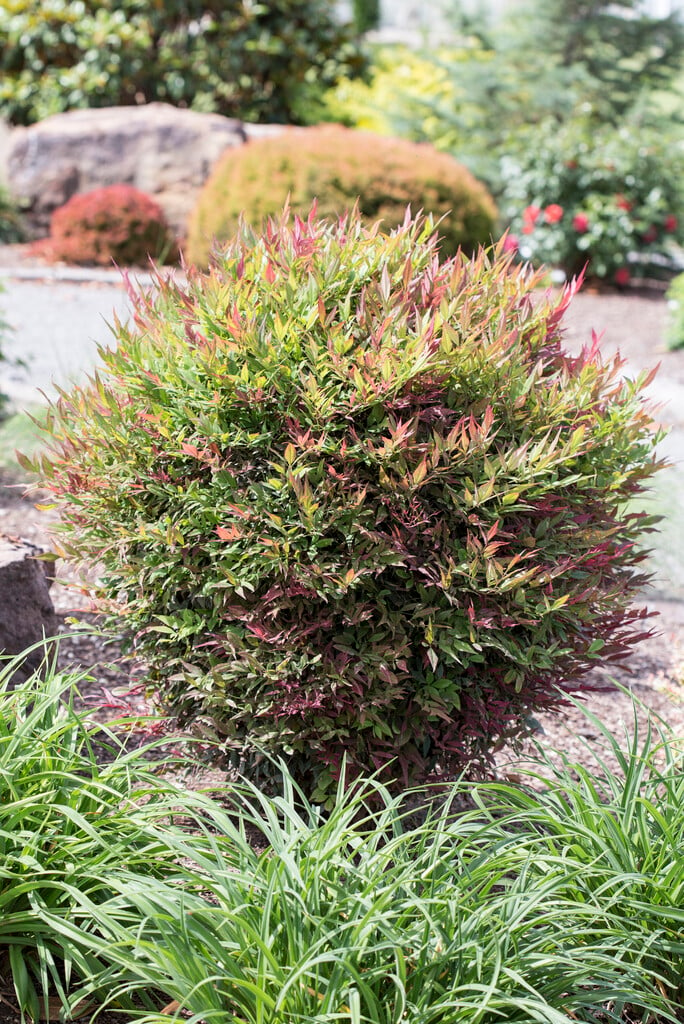
Nandina domestica 'Tuscan Flame'PBR

RHS Plant Profile
heavenly bamboo 'Tuscan Flame'
heavenly bamboo 'Tuscan Flame' visionspictures.com
Shrubs

A leafy shrub to around 1.2m high, with slender, upright stems and compound leaves divided into three narrow leaflets. Young leaves are dark red for most of their first year, contrasting with the deep green of older foliage, which also tints red in autumn and winter. Small white flowers are produced on older wood in early summer; when pollinated these are followed by persistent round red berries

Position

Full sun, Partial shade

Soil Types

Chalk, Clay, Loam, Sand

Max Height

1-1.5 metres

Max Spread

0.5-1 metres

Size

Time to Maturity
10–20 years
Max Spread
0.5-1 metres
Max Height
1-1.5 metres

Growing Conditions

Chalk Clay Loam Sand
Moisture
Moist but well–drained
pH
Acid or Alkaline or Neutral

Position

Full sun Partial shade
Aspect
East–facing or South–facing or West–facing
Exposure
Sheltered
Hardiness
H5
Drought Resistance
Yes

Colour & Scent

Season Stem Flower Foliage Fruit
Spring
Summer
Autumn
Winter

Botanical Details

Family
Berberidaceae
Native to GB/Ireland
No
Foliage
Evergreen, Semi evergreen
Habit
Bushy
Potentially harmful
Harmful if eaten. Wear gloves and other protective equipment when handling Pets (dogs, poultry): Harmful if eaten. For further information and contact numbers regarding pets, see the HTA guide to potentially harmful plants
Genus
Nandina are erect, evergreen shrubs with pinnate to 3-pinnate leaves composed of lance-shaped leaflets which colour well in autumn, and panicles of small, star-shaped white flowers, followed by bright red fruits
Name Status
Accepted

How to Grow

Cultivation

Grow in a moist but well-drained, humus-rich soil, in a sheltered position in full sun. May benefit from some light afternoon shade in hot summers. Mulch in autumn; may be deciduous in cold winters

Propagation

Propagate by semi-ripe cuttings in summer. As this plant is protected by Plant Breeders' Rights, any propagation should be for personal rather than commercial use

Suggested planting locations and garden types

  • City and courtyard gardens
  • Cottage and informal garden
  • Patio and container plants
  • Low Maintenance
  • Flower borders and beds
  • Hedging and screens
  • Wall side borders

Pruning

Minimal pruning required, see pruning group 9 if necessary

Pests

Generally pest-free

Diseases

May be susceptible to honey fungus (rarely) and a virus