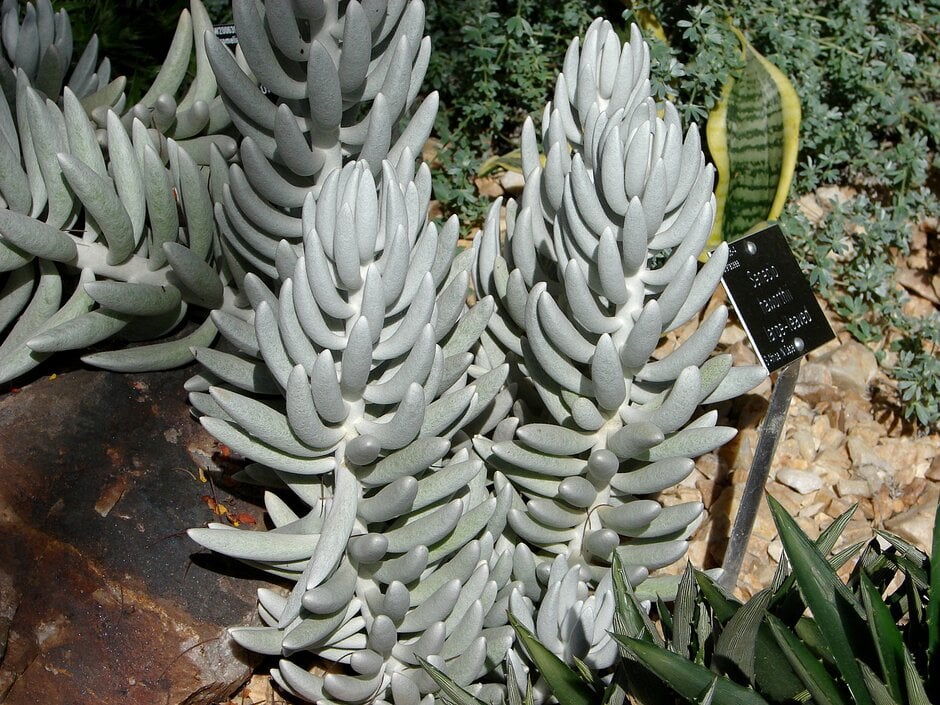
Caputia tomentosa

RHS Plant Profile
matted caputia
matted caputia Terence Smale

Other common names

ashweed, cocoon plant

Synonyms

Kleinia tomentosa
Senecio haworthii

Award of Garden Merit
Cactus Succulent

A succulent sub-shrub with fleshy, cylindrical white-hairy leaves arranged spirally round the stems and, occasionally, disk-like orange flower-heads 2cm across in summer

Position

Full sun

Soil Types

Loam, Sand

Max Height

0.1-0.5 metres

Max Spread

0.1-0.5 metres

Size

Time to Maturity
2–5 years
Max Spread
0.1-0.5 metres
Max Height
0.1-0.5 metres

Growing Conditions

Loam Sand
Moisture
Well–drained
pH
Acid or Alkaline or Neutral

Position

Full sun
Aspect
South–facing
Exposure
Sheltered
Hardiness
H1C

Colour & Scent

Season Stem Flower Foliage Fruit
Spring
Summer
Autumn
Winter

Botanical Details

Family
Asteraceae
Native to GB/Ireland
No
Foliage
Evergreen
Habit
Bushy
Potentially harmful
All parts of the plants are toxic. Wear gloves and wash hands after handling
Genus
A small genus of flowering succulents, native to South Africa, with clusters of silvery-white to green fleshy, cylinder-shaped leaves. Drought-tolerant and may produce daisy-like bright yellow flowers on long stems above the foliage
Name Status
Correct
Plant Range
South Africa (Cape)

How to Grow

Cultivation

Grow in a sharply drained soil in full sun. Under glass use a peat-free, loam-based soil with the addition of extra grit. Water moderately during the growing period and reduce water in the winter months, keeping the soil barely moist.

Propagation

Senecio haworthii rarely produces seed and the most reliable form of propagation is by semi-ripe cuttings taken in late summeer

Suggested planting locations and garden types

  • Patio and container plants

Pruning

No pruning generally required

Pests

Aphids and glasshouse red spider mite can be a problem under glass

Diseases

Generally disease-free