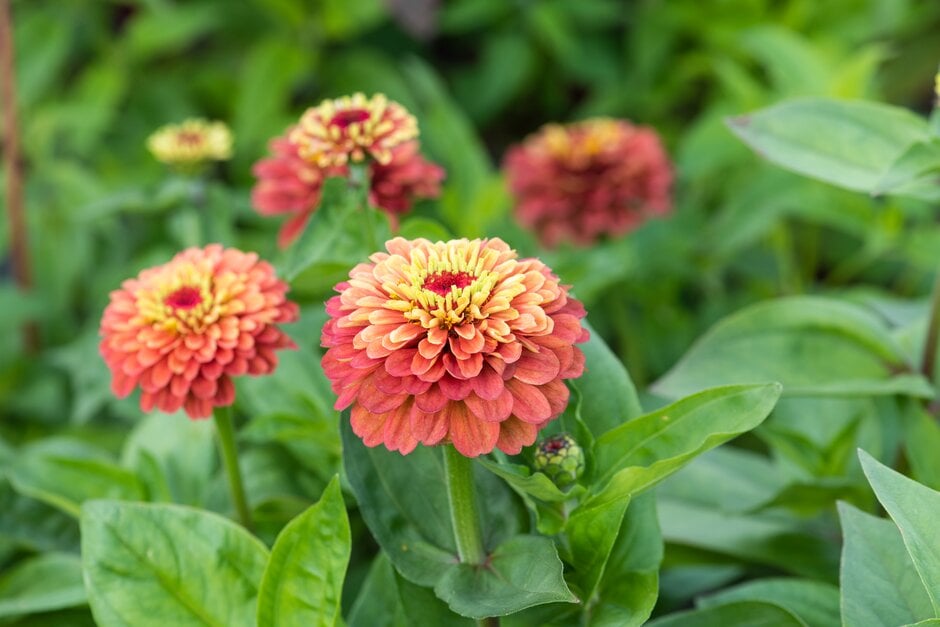
Zinnia elegans 'Queen Orange' (Queen Series) (d)

RHS Plant Profile
zinnia 'Queen Orange'
zinnia 'Queen Orange' RHS
Annual Biennial Bedding

A compact, bushy deciduous half-hardy annual with lance-shaped dark green leaves and upright stems of ball-shaped flowers from summer to early autumn, which graduate in colour from lime green in the centre through to shades of peach and orange. An ideal edition to a summer bedding bedding display or for cut flowers.

Position

Full sun

Soil Types

Chalk, Clay, Loam, Sand

Max Height

0.1-0.5 metres

Max Spread

0.1-0.5 metres

Size

Time to Maturity
1 year
Max Spread
0.1-0.5 metres
Max Height
0.1-0.5 metres

Growing Conditions

Chalk Clay Loam Sand
Moisture
Moist but well–drained or Well–drained
pH
Acid or Alkaline or Neutral

Position

Full sun
Aspect
South–facing or West–facing
Exposure
Exposed or Sheltered
Hardiness
H3

Colour & Scent

Season Stem Flower Foliage Fruit
Spring
Summer
Autumn
Winter

Botanical Details

Family
Asteraceae
Native to GB/Ireland
No
Foliage
Deciduous
Habit
Bushy
Genus
Zinnia can be annuals, perennials or sub-shrubs, with branching stems bearing opposite leaves and solitary terminal flower-heads in summer
Name Status
Unresolved

How to Grow

Cultivation

Grow in a fertile, well drained soil in full sun

Propagation

Propagate by seed; resents root disturbance so either sow in situ in late spring after the danger of frost has passed or take care when transplanting from seed sown under cover with heat in early spring

Suggested planting locations and garden types

  • City and courtyard gardens
  • Cottage and informal garden
  • Patio and container plants
  • Low Maintenance
  • Cut flowers
  • Flower borders and beds
  • Garden edging

Pruning

Deadhead to prolong flowering. Pinch back stems of young plants to encourage branching unless long-stemmed flowers are required

Pests

Generally pest-free

Diseases

May be susceptible to foot and root rot, grey moulds, fungal leaf spot and powdery mildews