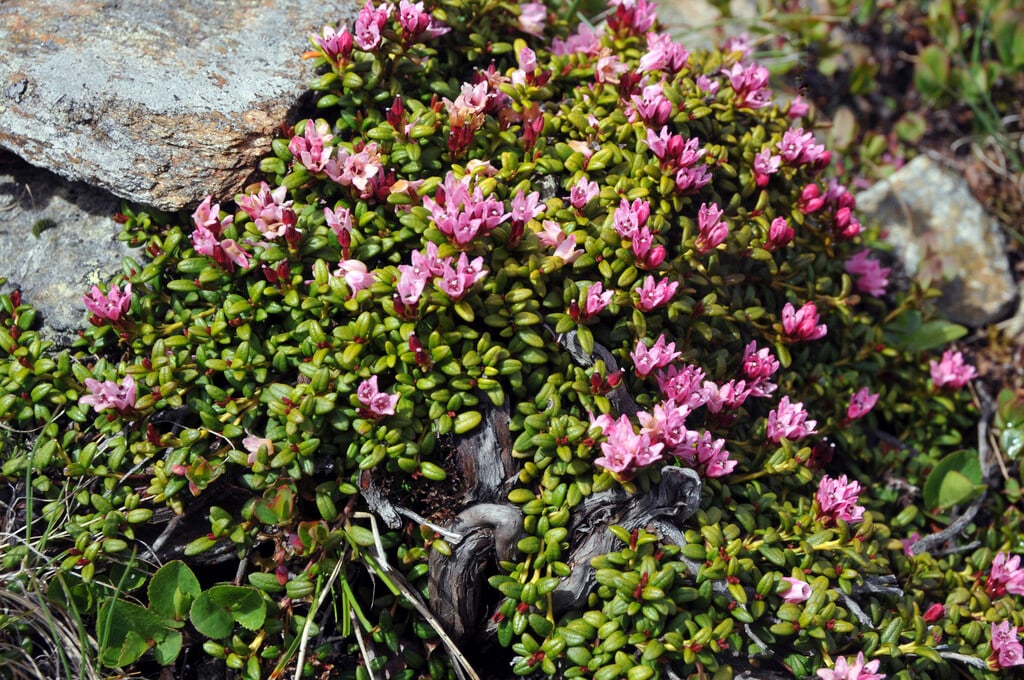
Kalmia procumbens

RHS Plant Profile
alpine azalea
alpine azalea visionspictures.com

Other common names

minezuo, mountain azalea, trailing azalea

Synonyms

Loiseleuria procumbens
Azalea procumbens

Shrubs

A prostrate, native, evergreen shrub forming low mounds or large mats of creeping stems rooting freely along the ground with tiny, leathery dark green leaves about 8mm long. Clusters of small, bell-shaped pink flowers produced at the ends of the stems in late spring

Position

Partial shade

Soil Types

Clay, Loam

Max Height

Up to 10 cm

Max Spread

0.5-1 metres

Size

Time to Maturity
2–5 years
Max Spread
0.5-1 metres
Max Height
Up to 10 cm

Growing Conditions

Clay Loam
Moisture
Moist but well–drained
pH
Acid

Position

Partial shade
Aspect
East–facing or North–facing
Exposure
Exposed or Sheltered
Hardiness
H6

Colour & Scent

Season Stem Flower Foliage Fruit
Spring
Summer
Autumn
Winter

Botanical Details

Family
Ericaceae
Native to GB/Ireland
Yes
Foliage
Evergreen
Habit
Matforming, Trailing
Potentially harmful
Harmful if eaten. Wear gloves and other protective equipment when handling. Pets (dogs, cats, rabbits, tortoises): Harmful if eaten. For further information and contact numbers regarding pets, see the HTA guide to potentially harmful plants
Genus
Kalmia are evergreen shrubs with simple, leathery leaves and racemes or corymbs of bowl-shaped flowers in spring or summer
Name Status
Correct
Plant Range
Northern Hemisphere (Arctic, sub-Acrtic, sub-Alpine)

How to Grow

Cultivation

Grow in moisture-retentive, humus-rich, acid soil in part shade, or in sun if soil remains reliably moist. Mulch anually with leaf mould or composted pine needles

Propagation

Propagate by semi-ripe cuttings in midsummer or by layering in late summer

Suggested planting locations and garden types

  • Cottage and informal garden
  • Low Maintenance
  • Banks and slopes
  • Ground cover

Pruning

No pruning required

Pests

Generally pest-free

Diseases

May be susceptible to honey fungus in gardens where it is present but insufficient data to determine degree of susceptibility