Phalaenopsis Taida King's Caroline gx
moth orchid Taida King's Caroline gx
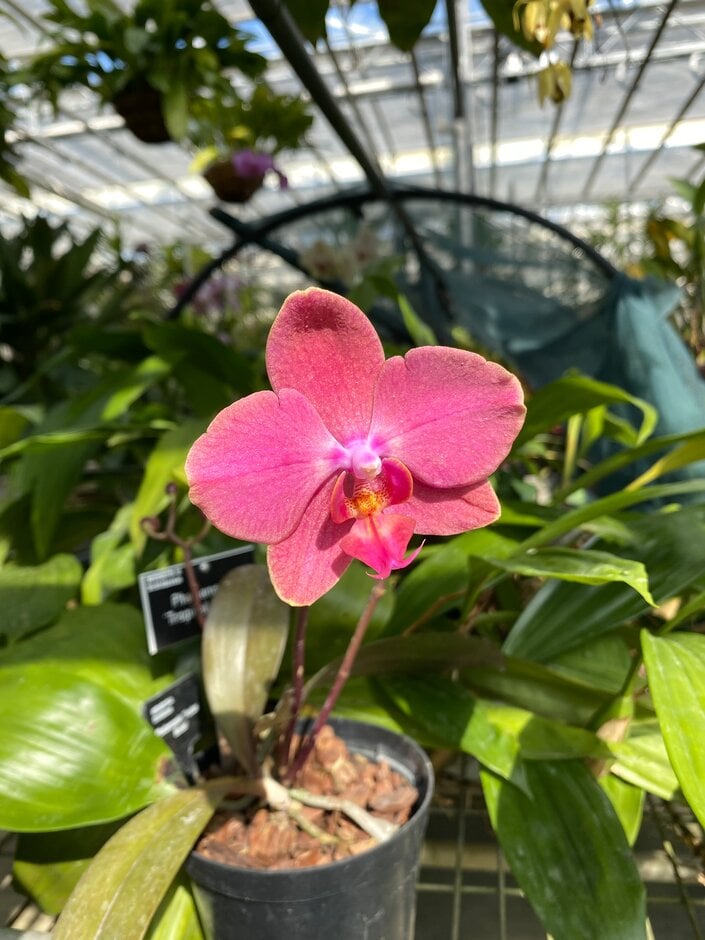
A small to medium-sized, evergreen, epiphytic orchid with green, fleshy, elliptic six to ten leaves. The leaves are alternately arranged in two rows around a short, central stem, wholly covered with overlapping leaf bases. Arching or semi-pendant flowering stems emerge beneath older leaves and carry up to twenty, long-lasting flowers, 5cm in size. The flowers are white with a dark purple-red pattern
Size
Ultimate height
0.1–0.5 metresTime to ultimate height
2–5 yearsUltimate spread
0.1–0.5 metresGrowing conditions
Moisture
Well–drainedpH
NeutralColour & scent
| Stem | Flower | Foliage | Fruit | |
| Spring | White Pink Red | Green | ||
|---|---|---|---|---|
| Summer | White Pink Red | Green | ||
| Autumn | White Pink Red | Green | ||
| Winter | White Pink Red | Green |
Position
- Partial shade
Aspect
East–facing or West–facing
Exposure
Sheltered Hardiness
H1ABotanical details
- Family
- Orchidaceae
- Native to GB / Ireland
- No
- Foliage
- Evergreen
- Habit
- Columnar upright
- Genus
Phalaenopsis are a large genus of species and hybrid mainly epiphytic orchids. Short, upward growing, stem-like rhizomes with no pseudobulbs produce oval, fleshy mid to dark green leaves and flowers in branched racemes from the base of the leaves
- Name status
Accepted
How to grow
Cultivation
Grow in an open bark-based orchid compost. Provide enough bright filtered light, but keep away from direct mid-day sunlight or heating source. Ideal temperatures are around 17°C at night and 20 - 25 °C during day. Mist aerial roots regularly and water the plant when almost dry - pale, silvery roots are a good indication when to water. Orchid fertiliser can be applied regularly throughout the season. See Phalaenopsis cultivation
Propagation
Propagation by seed is only possible in controlled laboratory environment. Mature plants may produce sideshoots (keiki) which may be removed and potted separately into orchid propagation mix when the new roots are at least 2cm long
Suggested planting locations and garden types
- Houseplants
- Conservatory and greenhouse
Pruning
No pruning required. Cut back flowered stem to lower node to encourage further flowering
Pests
May be susceptible to mealybugs, aphids and scale insects
Diseases
Generally disease-free; avoid watering centre of the leaf crown, to prevent bacterial rots
Get involved
The RHS is the UK’s gardening charity, helping people and plants to grow - nurturing a healthier, happier world, one person and one plant at a time.