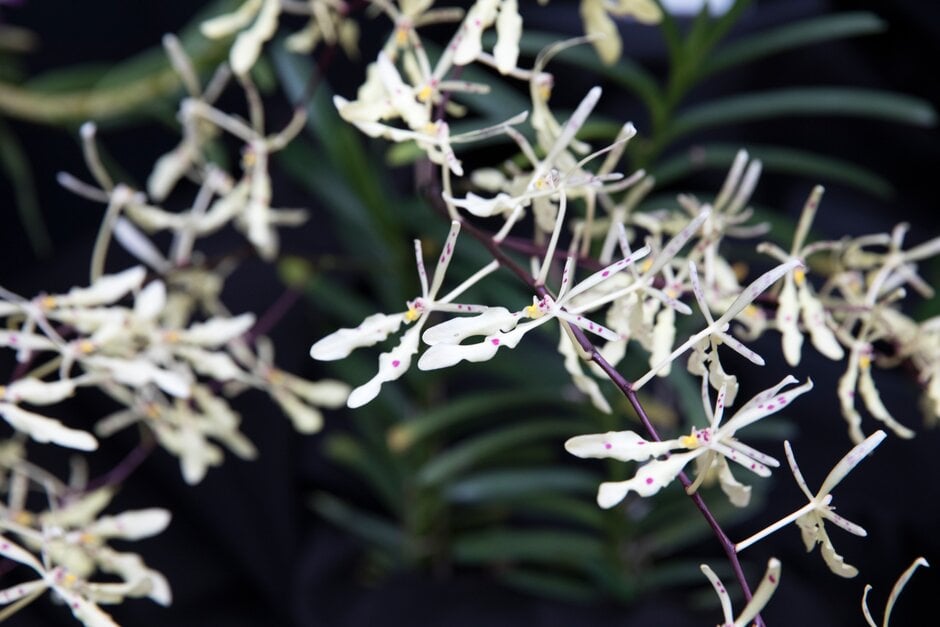
Renanthera citrina from Vietnam
An epiphytic orchid with woody stems to 20cm long carrying leathery, lanceolate leaves. Up to 25 flowers are borne on stems to around 45cm long from winter into spring; flowers to 6cm long are pale yellow with 1-3 purple spots on the petals and 3-lobed lips

Size
Ultimate height
0.1–0.5 metresTime to ultimate height
2–5 yearsUltimate spread
0.1–0.5 metresGrowing conditions
Moisture
Well–drainedpH
Acid, NeutralColour & scent
| Stem | Flower | Foliage | Fruit | |
| Spring | Yellow Purple | Green | ||
|---|---|---|---|---|
| Summer | Green | |||
| Autumn | Green | |||
| Winter | Yellow Purple | Green |
Position
- Partial shade
Aspect
North–facing or West–facing or East–facing
Exposure
Sheltered Hardiness
H1CBotanical details
- Family
- Orchidaceae
- Native to GB / Ireland
- No
- Foliage
- Semi evergreen
- Habit
- Columnar upright
- Genus
Renanthera is a genus of large, scrambling epiphytic and terrestrial orchids native to China and the Himalayas. Orchids within this genus produce branched stems with an abundance of flowers in shades of yellow, orange of red.
- Name status
Unresolved
How to grow
Cultivation
Grow in epiphytic orchid compost and from late spring to summer, in partial shade with good ventilation, day temperatures between 18-25°C and night above 10°C, water freely adding orchid fertiliser every third watering and provide high humidity by misting twice daily. Keep in well lit conditions from autumn to early spring and keep dry in winter. See indoor orchid cultivation
Propagation
Propagate by division when the plant over-fills the pot
Suggested planting locations and garden types
- Patio and container plants
Pruning
No pruning required, cut down flowered stems as necessary
Pests
May be susceptible to aphids, glasshouse red spider mite and mealybugs
Diseases
Generally disease-free
Get involved
The Royal Horticultural Society is the UK’s leading gardening charity. We aim to enrich everyone’s life through plants, and make the UK a greener and more beautiful place.