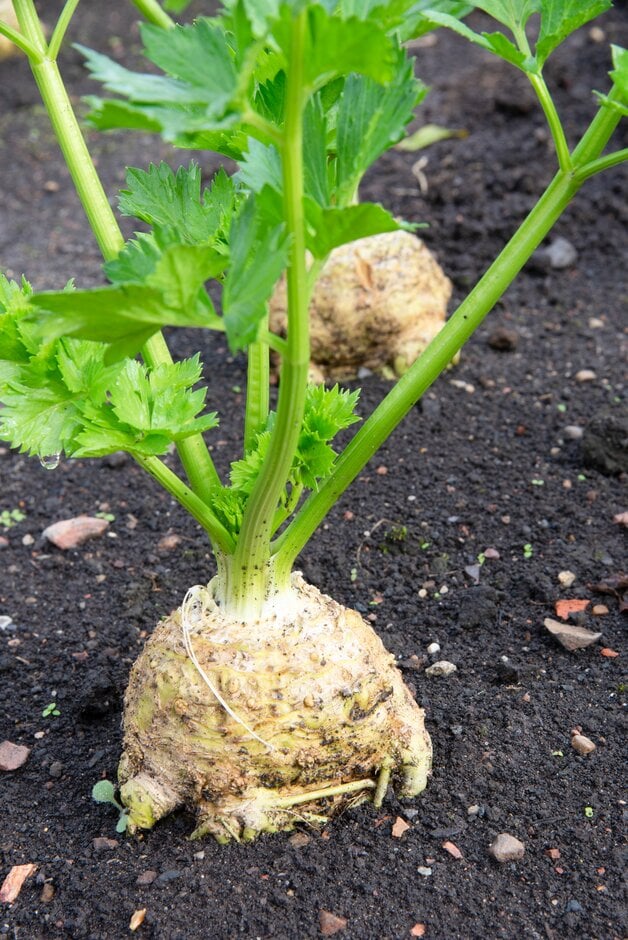
Apium graveolens var. rapaceum 'Asterix'

RHS Plant Profile
celery 'Asterix'
celery 'Asterix' RHS
Award of Garden Merit
Annual Biennial

Grown as an annual with a clump of bright green leaves above a swollen, edible root. It is earlier to reach cropping size and has resistance to both bolting and disease

Position

Full sun

Soil Types

Chalk, Clay, Loam, Sand

Max Height

0.1-0.5 metres

Max Spread

0.1-0.5 metres

Size

Time to Maturity
1–2 years
Max Spread
0.1-0.5 metres
Max Height
0.1-0.5 metres

Growing Conditions

Chalk Clay Loam Sand
Moisture
Moist but well–drained
pH
Acid or Alkaline or Neutral

Position

Full sun
Aspect
East–facing or North–facing or South–facing or West–facing
Exposure
Sheltered
Hardiness
H6

Colour & Scent

Season Stem Flower Foliage Fruit
Spring
Summer
Autumn
Winter

Botanical Details

Family
Apiaceae
Native to GB/Ireland
No
Foliage
Semi evergreen
Habit
Columnar upright
Potentially harmful
Harmful to skin with sunlight. Wear gloves and other protective equipment when handling
Genus
Apium can be annual, biennial or perennial herbaceous plants, with leaves divided into three leaflets, or pinnate; in summer, tiny white flowers are borne in umbels
Name Status
Accepted

How to Grow

Cultivation

Grow in reliably moist, rich soil in full sun. For more advice see celeriac cultivation

Propagation

Propagate by seed. See sowing vegetable seeds or sowing seeds indoors for further advice

Pruning

No pruning required

Pests

May be susceptible to slugs and snails and and celery leaf miner

Diseases

May be susceptible to celery leaf spot