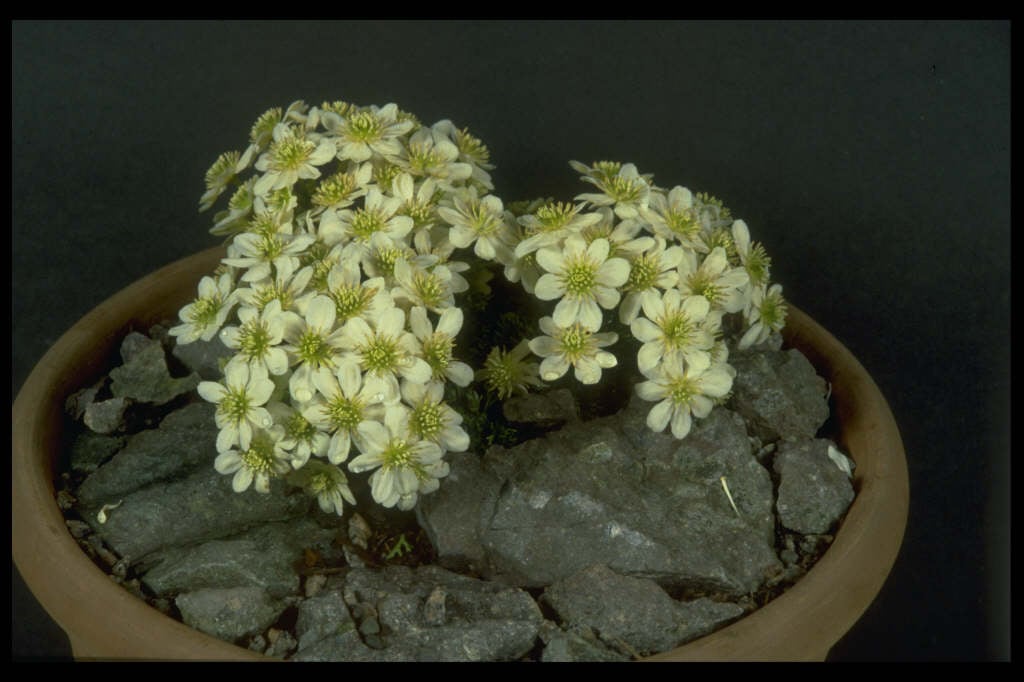
Clematis marmoraria

RHS Plant Profile
marbled clematis
marbled clematis www.gardenworldimages.com
Shrubs Alpine Rockery

A prostrate evergreen dioecious shrub with glossy, deeply divided leaves of rigid texture. Flowers 2cm in width, with 5-8 oblong creamy-white sepals, sometimes with a green tinge, opening in early spring

Position

Full sun

Soil Types

Chalk, Loam, Sand

Max Height

Up to 10 cm

Max Spread

0.1-0.5 metres

Size

Time to Maturity
5–10 years
Max Spread
0.1-0.5 metres
Max Height
Up to 10 cm

Growing Conditions

Chalk Loam Sand
Moisture
Well–drained
pH
Acid or Alkaline or Neutral

Position

Full sun
Aspect
East–facing or South–facing
Exposure
Exposed
Hardiness
H3

Colour & Scent

Season Stem Flower Foliage Fruit
Spring
Summer
Autumn
Winter

Botanical Details

Family
Ranunculaceae
Native to GB/Ireland
No
Foliage
Evergreen
Habit
Matforming
Potentially harmful
Skin irritant. Wear gloves and other protective equipment when handling. Pets (rabbits): Harmful if eaten. For further information and contact numbers regarding pets, see the HTA guide to potentially harmful plants
Genus
Clematis can be deciduous or evergreen shrubs or herbaceous perennials, mostly climbing by twining leaf-stalks, and often with showy flowers. Some have attractive fluffy seedheads in autumn
Name Status
Correct
Plant Range
New Zealand

How to Grow

Cultivation

Requires sharp drainage in a sheltered position. Ideal for growng in a container in a cool greenhouse, conservatory, alpine house or rock garden in full sun

Propagation

Propagate by seed sown as soon as it is ripe in pots in a cold frame

Suggested planting locations and garden types

  • Rock garden
  • Gravel garden
  • Patio and container plants

Pruning

Pruning (clematis) group 1. Remove dead or damaged stems after flowering

Pests

May be susceptible to aphids, snails and caterpillars; petals may be eaten by earwigs

Diseases

May be susceptible to honey fungus (rarely), clematis wilt and clematis slime flux