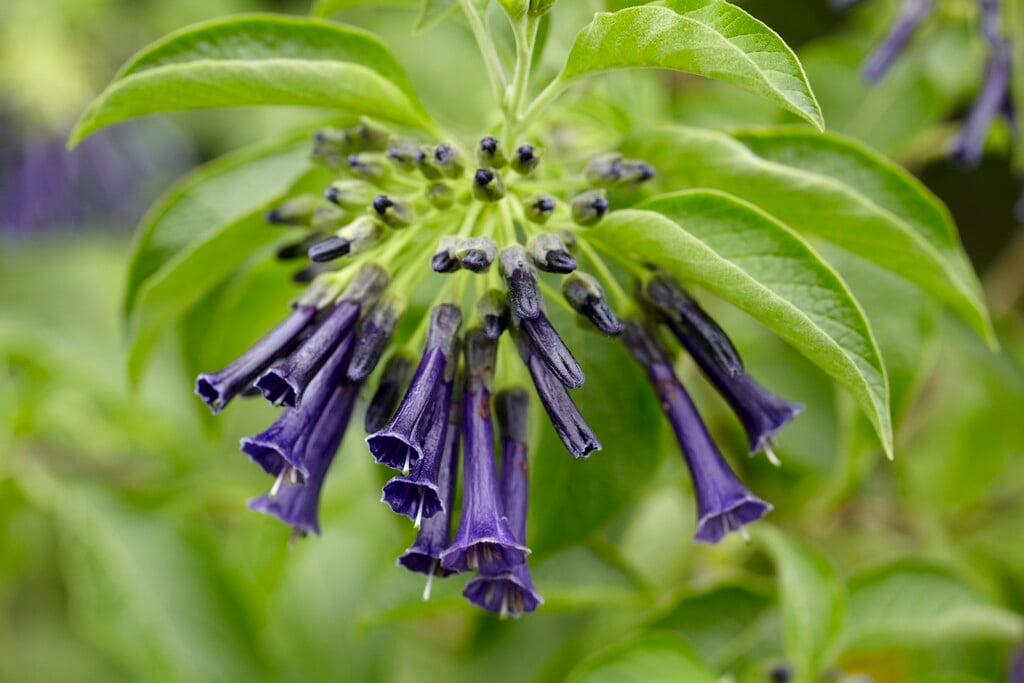
Iochroma cyaneum

RHS Plant Profile
violet bush
violet bush visionspictures.com

Synonyms

Iochroma tubulosum
Iochroma lanceolatum

Award of Garden Merit
Herbaceous Perennial

A deciduous to semi-evergreen perennial, related to Brugmansia, with green, slightly velvety foliage best suited to a conservatory or greenhouse but can be grown outside against a sheltered wall. Long, trumpet-shaped purple flowers appear in May to June and sometimes again in July and August

Position

Full sun

Soil Types

Loam, Sand

Max Height

1.5-2.5 metres

Max Spread

1.5-2.5 metres

Size

Time to Maturity
1–2 years
Max Spread
1.5-2.5 metres
Max Height
1.5-2.5 metres

Growing Conditions

Loam Sand
Moisture
Moist but well–drained
pH
Acid or Alkaline or Neutral

Position

Full sun
Aspect
South–facing or West–facing
Exposure
Sheltered
Hardiness
H3
Drought Resistance
Yes

Colour & Scent

Season Stem Flower Foliage Fruit
Spring
Summer
Autumn
Winter

Botanical Details

Family
Solanaceae
Native to GB/Ireland
No
Foliage
Deciduous
Habit
Bushy
Genus
Iochroma are evergreen or deciduous shrubs or small trees, with simple, pointed, oval leaves. The nodding or hanging tubular or trumpet-shaped flowers may be purple, blue, red, white or yellow and are followed by pulpy berries enclosed in a large calyx
Name Status
Correct
Plant Range
NW South America

How to Grow

Cultivation

Grow in moist, but well-drained soil in bright, filtered light, in a conservatory or greenhouse, although will tolerate some shade. Allow soil to dry out between waterings. If grown outside, plant in a sheltered part of the garden against a warm, sunny wall. Suitable for pots and containers which can be brought into a conservatory or greenhouse over winter

Propagation

Propagate by root cuttings or propagate by seed sown in fine, well-draining potting compost. Place pots in a warm room in filtered sunlight - germination will normally take aroudn 6 weeks

Suggested planting locations and garden types

  • City and courtyard gardens
  • Cottage and informal garden
  • Patio and container plants
  • Conservatory and greenhouse
  • Wall side borders

Pruning

Prune lightly after flowering to keep neat, but can be cut back hard, even to ground level, to encourage a compact shape and bushy habit

Pests

May be susceptible to glasshouse red spider mite, glasshouse whitefly and mealybugs

Diseases

May be susceptible to Fusarium wilt and verticillium wilt