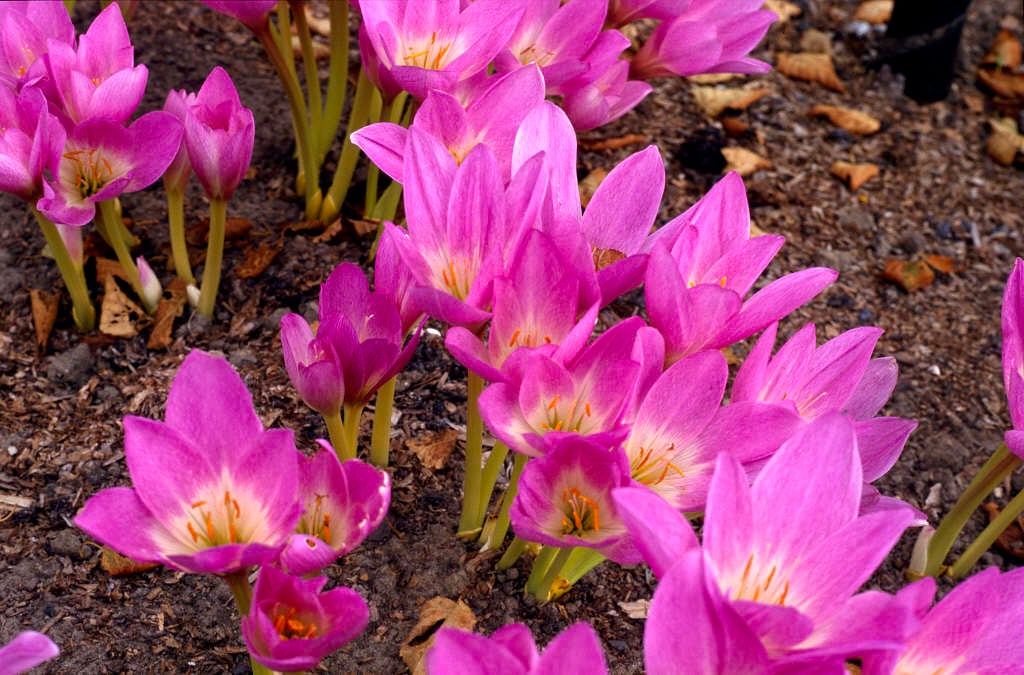
Colchicum speciosum

RHS Plant Profile
giant meadow saffron
giant meadow saffron RHS 2002
Plants for pollinators
Bulbs

A corm producing 1-3 deep purplish-rose flowers up to 8cm in length, with pale green or whitish tubes. Strap-shaped, rich green leaves to 25cm in length develop in spring

Position

Full sun

Soil Types

Chalk, Clay, Loam, Sand

Max Height

0.1-0.5 metres

Max Spread

0.1-0.5 metres

Size

Time to Maturity
2–5 years
Max Spread
0.1-0.5 metres
Max Height
0.1-0.5 metres

Growing Conditions

Chalk Clay Loam Sand
Moisture
Moist but well–drained or Well–drained
pH
Acid or Alkaline or Neutral

Position

Full sun
Aspect
South–facing or West–facing or East–facing
Exposure
Sheltered
Hardiness
H5

Colour & Scent

Season Stem Flower Foliage Fruit
Spring
Summer
Autumn
Winter

Botanical Details

Family
Colchicaceae
Native to GB/Ireland
No
Foliage
Deciduous
Habit
Clump forming
Potentially harmful
TOXIC if eaten. Wear gloves and other protective equipment when handling TOXIC to pets - see the HTA guide to potentially harmful plants for further information and useful contact numbers
Genus
Colchicum are cormous perennials with usually coarse, broadly strap-shaped leaves which appear with or after the goblet-shaped flowers
Name Status
Correct
Plant Range
N Turk., Iran, Cauc.

How to Grow

Cultivation

May be naturalized in turf. Grow in moist but well-drained, deep, humus-rich, fertile soil. Intolerant of waterlogging

Propagation

Propagate by seed sown in containers in an open frame when ripe or separate corms when dormant in summer

Suggested planting locations and garden types

  • Cottage and informal garden
  • Wildlife gardens
  • Wildflower meadow
  • Rock garden
  • Underplanting of roses and shrubs
  • Flower borders and beds

Pruning

No pruning required

Pests

May be susceptible to slugs

Diseases

May be susceptible to bulb grey moulds