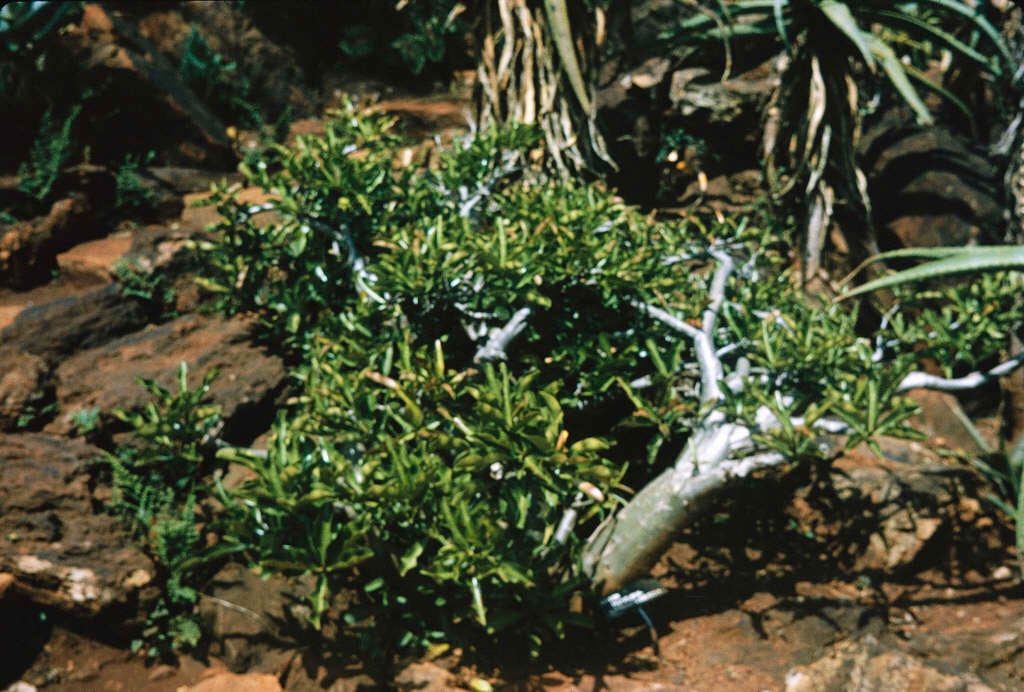
Adenium obesum

RHS Plant Profile
desert rose
desert rose RHS

Synonyms

Adenium obesum 'Desert Rose'
Adenium honghel
Adenium coetaneum
Adenium arabicum
Adenium obesum var. obesum

Award of Garden Merit
Cactus Succulent

A succulent, shrubby perennial with very swollen stem-like caudex tapering to a branched apex bearing small clusters of red, pink or white flowers, which open before the ovate leaves

Position

Partial shade

Soil Types

Loam, Sand

Max Height

1-1.5 metres

Max Spread

1-1.5 metres

Size

Time to Maturity
2–5 years
Max Spread
1-1.5 metres
Max Height
1-1.5 metres

Growing Conditions

Loam Sand
Moisture
Well–drained
pH
Alkaline or Neutral

Position

Partial shade
Aspect
South–facing or West–facing
Exposure
Sheltered
Hardiness
H1A

Colour & Scent

Season Stem Flower Foliage Fruit
Spring
Summer
Autumn
Winter

Botanical Details

Family
Apocynaceae
Native to GB/Ireland
No
Foliage
Deciduous
Habit
Bushy
Potentially harmful
Harmful if eaten. Wear gloves and other protective equipment when handling Pets (dogs, cats): Harmful if eaten - see the HTA guide to potentially harmful plants for further information and useful contact numbers
Genus
Adenium are shrub-like, succulent perennials with a bottle-shaped, swollen caudex, branched at the apex and bearing terminal clusters of simple leaves, with small salver-shaped flowers
Name Status
Correct
Plant Range
Arabia, Tropical Africa

How to Grow

Cultivation

Under glass grow in peat-free, loam-based potting compost with added sharp sand in full light with shade from hot sun

Propagation

Propagate by seed sown as soon as ripe at 21°C (70°F). Root cuttings from non-flowering shoots in summer with bottom heat

Suggested planting locations and garden types

  • Architectural
  • Low Maintenance

Pruning

No pruning required

Pests

May be susceptible to aphids

Diseases

Generally disease-free