Polygala vulgaris
common milkwort
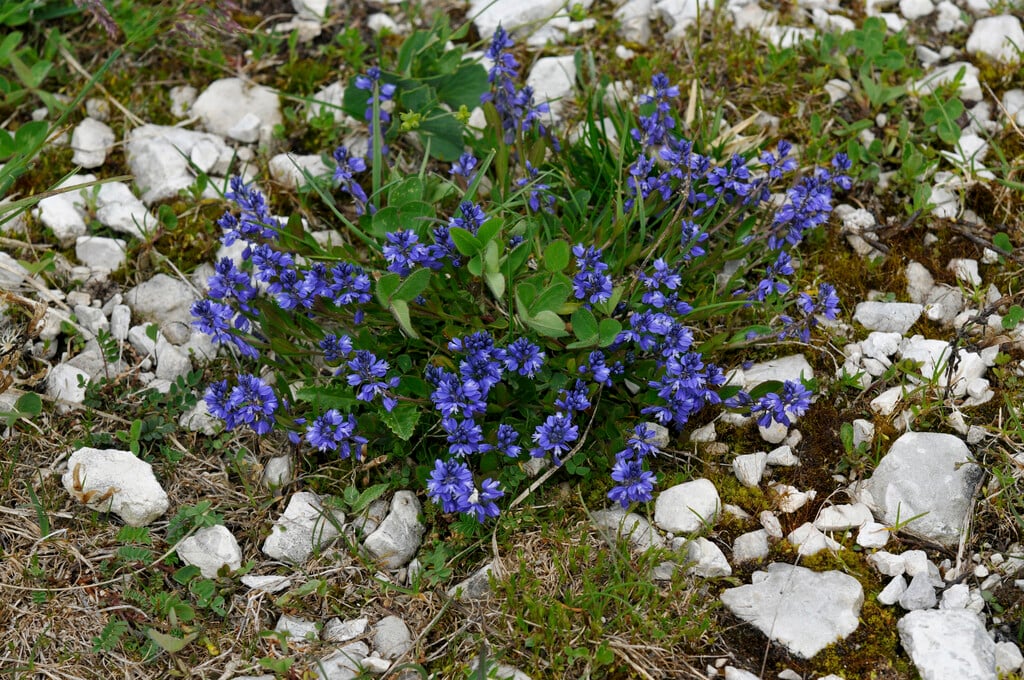
A widespread native wildflower with rather sprawly, woody-based stems up to 20cm, bearing very small, oval, evergreen leaves and sprays of small flowers that are usually blue but can be purple, pink or white. A food plant for the dark green Fritillary butterfly as well as supplying pollen and nectar
Other common names
cross flowergand flower
see moregang flower
gay wings
procession flower
Rogation flower
llysiau crist
Size
Ultimate height
0.1–0.5 metresTime to ultimate height
2–5 yearsUltimate spread
0.1–0.5 metresGrowing conditions
Moisture
Well–drainedpH
Acid, Alkaline, NeutralColour & scent
| Stem | Flower | Foliage | Fruit | |
| Spring | Blue Pink Purple White | Green | ||
|---|---|---|---|---|
| Summer | Blue Pink Purple White | Green | ||
| Autumn | Green | |||
| Winter | Green |
Position
- Full sun
- Partial shade
Aspect
East–facing or South–facing or West–facing
Exposure
Exposed or ShelteredDrought resistance
Yes Hardiness
H5Botanical details
- Family
- Polygalaceae
- Native to GB / Ireland
- Yes
- Foliage
- Evergreen
- Habit
- Trailing
- Genus
Polygala can be annuals, evergreen perennials or shrubs, with simple leaves and racemes of somewhat pea-shaped flowers
- Name status
Correct
How to grow
Cultivation
Occurs naturally in short grassland, and on heaths and dunes, preferring well-drained soil in a sunny position
Propagation
Propagate by seed or by division
Suggested planting locations and garden types
- Cottage and informal garden
- Rock garden
- Wildlife gardens
- Banks and slopes
Pruning
No pruning required
Pests
Generally pesr-free
Diseases
Generally disease-free
Get involved
The Royal Horticultural Society is the UK’s leading gardening charity. We aim to enrich everyone’s life through plants, and make the UK a greener and more beautiful place.