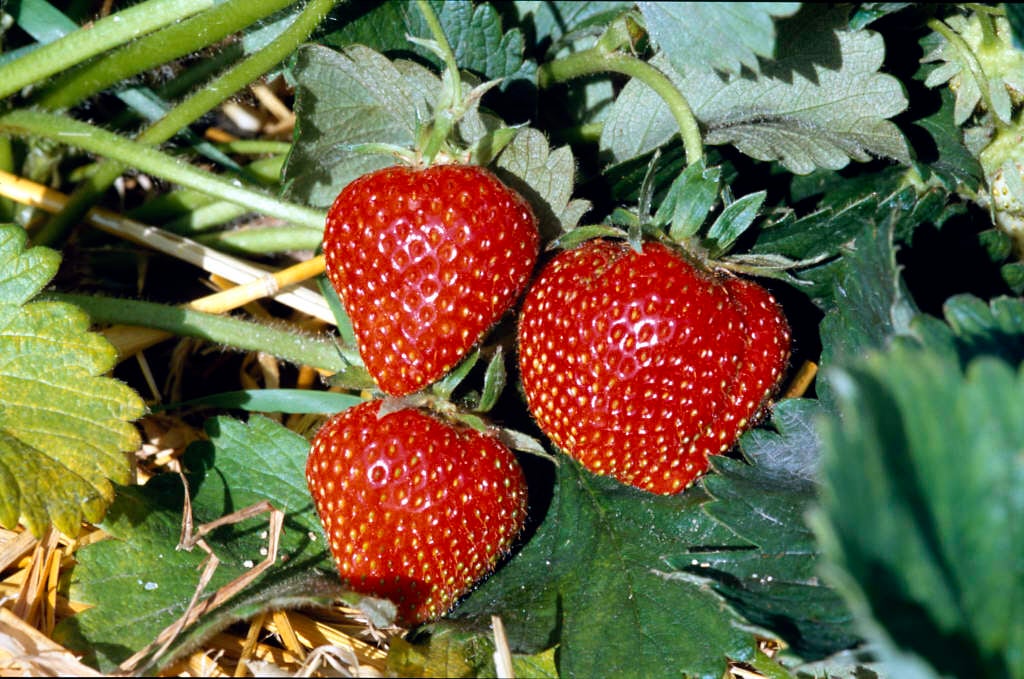
Fragaria × ananassa 'Hapil' (F)

RHS Plant Profile
strawberry 'Hapil'
strawberry 'Hapil' RHS

Synonyms

Fragaria 'Hapil'

Award of Garden MeritPlants for pollinators
Fruit Edible

An early to mid-season heavy cropping cultivar with large, glossy berries of a good flavour; vigorous

Position

Full sun

Soil Types

Loam

Max Height

0.1-0.5 metres

Max Spread

0.1-0.5 metres

Size

Time to Maturity
1–2 years
Max Spread
0.1-0.5 metres
Max Height
0.1-0.5 metres

Growing Conditions

Loam
Moisture
Moist but well–drained
pH
Neutral

Position

Full sun
Aspect
South–facing
Exposure
Sheltered
Hardiness
H6

Colour & Scent

Season Stem Flower Foliage Fruit
Spring
Summer
Autumn
Winter

Botanical Details

Family
Rosaceae
Native to GB/Ireland
No
Foliage
Semi evergreen
Habit
Trailing
Genus
Fragaria are stoloniferous perennials with leaves composed of three leaflets, and rounded white or pink flowers followed by edible red fruits
Name Status
Accepted
Horticultural Group
This genus produces fruit, but not necessarily edible fruit

How to Grow

Cultivation

Grow in fertile, moist but well-drained soil in full sun. Plant in single or double rows with 30-45cm between plants and 75cm between rows. Plant through biodegradable, weed-suppressing membrane, or apply straw to keep strawberries clean. Can be successfully grown in a container, including growbags. See strawberry cultivation for further details

Propagation

Remove and transplant runners

Suggested planting locations and garden types

  • Patio and container plants
  • Cottage and informal garden
  • Wildlife gardens
  • Edible fruit
  • Flower borders and beds

Pruning

Remove excess runners

Pests

May be susceptible to aphids, slugs, glasshouse red spider mite and vine weevil

Diseases

May be susceptible to strawberry viruses and root rot. Fruit may be susceptible to grey moulds. This cultivar may be susceptible to verticillium wilt