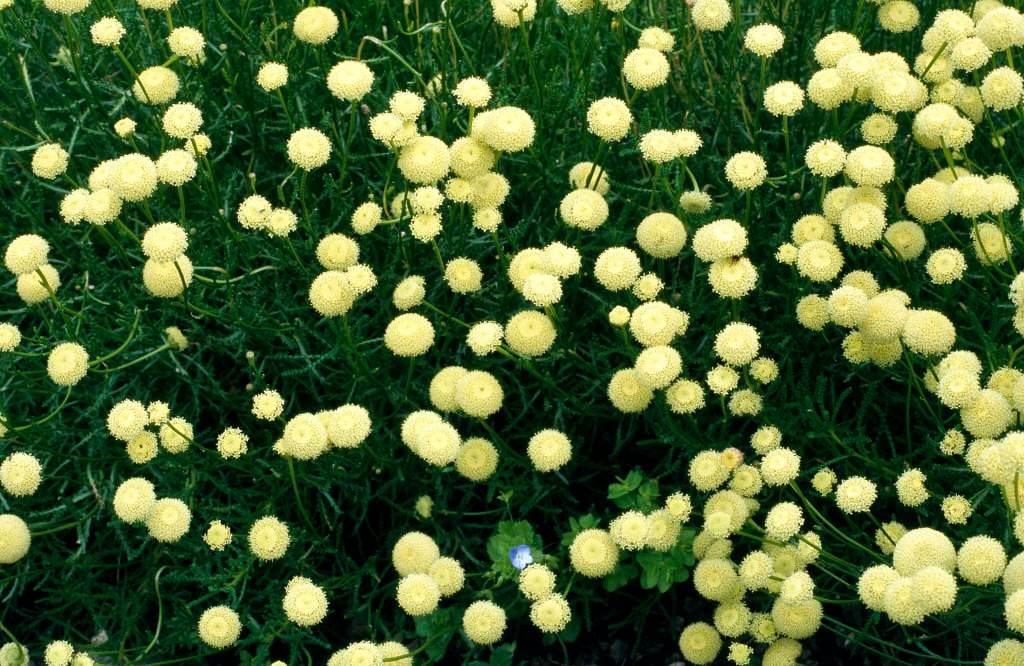
Santolina rosmarinifolia subsp. rosmarinifolia

RHS Plant Profile
green lavender cotton
green lavender cotton RHS 1999

Other common names

holy flax

Synonyms

Santolina viridis
Santolina virens
Santolina rosmarinifolia virens

Shrubs

A spreading evergreen shrub to 60cm tall, with finely dissected green leaves and bright yellow flower heads 2cm wide in mid summer

Position

Full sun

Soil Types

Chalk, Loam, Sand

Max Height

0.5-1 metres

Max Spread

0.5-1 metres

Size

Time to Maturity
5–10 years
Max Spread
0.5-1 metres
Max Height
0.5-1 metres

Growing Conditions

Chalk Loam Sand
Moisture
Moist but well–drained or Well–drained
pH
Acid or Alkaline or Neutral

Position

Full sun
Aspect
West–facing or South–facing
Exposure
Sheltered
Hardiness
H5

Colour & Scent

Fragrance Foliage
Season Stem Flower Foliage Fruit
Spring
Summer
Autumn
Winter

Botanical Details

Family
Asteraceae
Native to GB/Ireland
No
Foliage
Evergreen
Habit
Bushy
Genus
Santolina are aromatic, dwarf evergreen shrubs with entire or pinnately dissected leaves and dense, button-like flower-heads in summer
Name Status
Correct
Plant Range
Spain, Portugal

How to Grow

Cultivation

Easy to grow evergreen sub-shrub that thrives in hot, sunny, well-drained sites. Useful as a dwarf-hedging substitute although they can be short-lived

Propagation

Propagate by semi-ripe cuttings with bottom heat in late-summer

Suggested planting locations and garden types

  • City and courtyard gardens
  • Cottage and informal garden
  • Gravel garden
  • Patio and container plants
  • Rock garden
  • Coastal
  • Flower borders and beds
  • Hedging and screens
  • Garden edging

Pruning

Pruning group 10. Trim back after flowering to maintain a dense, compact shrub

Pests

Generally pest-free

Diseases

May be susceptible to honey fungus in gardens where it is present but insufficient data to determine degree of susceptibility