Primula Lissadel hybrids (Pf)

RHS Plant Profile
primrose Lissadel hybrids
primrose Lissadel hybrids RHS
Herbaceous Perennial

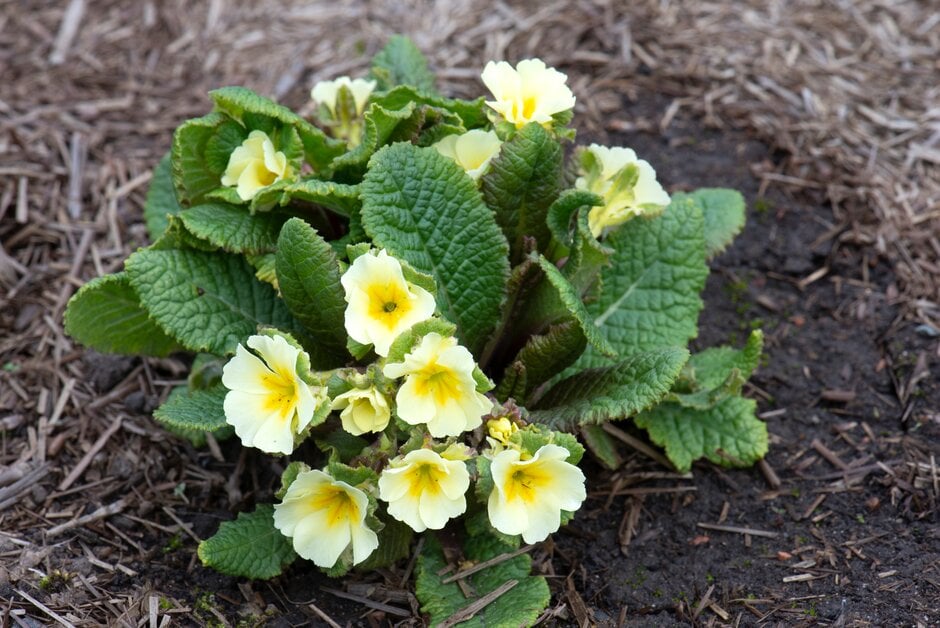
A compact, rosette-forming, evergreen perennial with dark green foliage. Creamy, pale yellow cupped flowers with ruffled edges and a darker yellow centre appear in the spring

Position

Partial shade

Soil Types

Loam, Sand

Max Height

0.1-0.5 metres

Max Spread

0.1-0.5 metres

Size

Time to Maturity
2–5 years
Max Spread
0.1-0.5 metres
Max Height
0.1-0.5 metres

Growing Conditions

Loam Sand
Moisture
Moist but well–drained
pH
Acid or Neutral

Position

Partial shade
Aspect
East–facing or North–facing or West–facing
Exposure
Exposed or Sheltered
Hardiness
H5

Colour & Scent

Season Stem Flower Foliage Fruit
Spring
Summer
Autumn
Winter

Botanical Details

Family
Primulaceae
Native to GB/Ireland
No
Foliage
Evergreen
Habit
Clump forming
Genus
Primula are herbaceous or semi-evergreen perennials, forming a basal rosette of simple leaves, with salver-shaped or bell-shaped flowers which may be solitary or carried in an umbel or in whorls on an erect stem
Name Status
Correct
Horticultural Group
Proliferae section primulas are moisture-loving herbaceous or semi-evergreen perennials forming a rosette of basal leaves, with erect stems each carrying several whorls of salver-shaped flowers

How to Grow

Cultivation

Grow in full sun or partial shade in moderately fertile, moist but well-drained, humus-rich soil

Propagation

Propagate by division in autumn or after flowering

Suggested planting locations and garden types

  • City and courtyard gardens
  • Cottage and informal garden
  • Patio and container plants
  • Flower borders and beds
  • Garden edging
  • Underplanting of roses and shrubs

Pruning

No pruning required

Pests

May be susceptible to aphids, vine weevil, slugs, leaf and bud eelworms, leaf-mining flies and glasshouse red spider mite

Diseases

May be susceptible to primula leaf spot, primula brown core and grey moulds