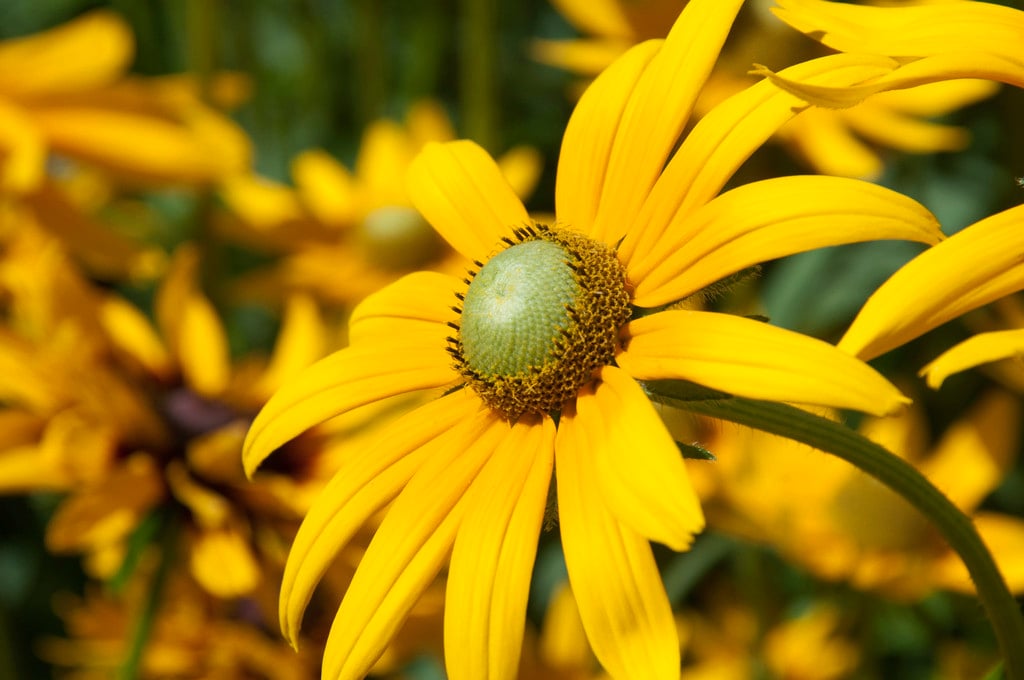
Rudbeckia hirta 'Irish Eyes'
black-eyed Susan 'Irish Eyes'
A short-lived perennial, usually grown as an annual, to 75cm in height, from mid-summer to early autumn produces classic golden-yellow flowerheads with narrow, slightly-tapered ray florets surrounding a pale-green "eye" that turns yellow-brown as the disc florets open
Buy this plant
Size
Ultimate height
0.5–1 metresTime to ultimate height
1–2 yearsUltimate spread
0.1–0.5 metresGrowing conditions
Moisture
Moist but well–drainedpH
Acid, Alkaline, NeutralColour & scent
| Stem | Flower | Foliage | Fruit | |
| Spring | ||||
|---|---|---|---|---|
| Summer | Gold Green Yellow | Green | ||
| Autumn | Gold Green Yellow | |||
| Winter |
Position
- Full sun
- Partial shade
Aspect
South–facing or West–facing
Exposure
Exposed or Sheltered Hardiness
H3Botanical details
- Family
- Asteraceae
- Native to GB / Ireland
- No
- Foliage
- Deciduous
- Habit
- Bushy
- Potentially harmful
- Harmful if eaten. Wear gloves and other protective equipment when handling. Pets: Harmful if eaten. For further information and contact numbers regarding pets, see the HTA guide to potentially harmful plants
- Genus
Rudbeckia may be annuals, biennials or rhizomatous herbaceous perennials, with simple or pinnately divided leaves and large daisy-like flower-heads with yellow or orange rays surrounding a prominent conical disk
- Name status
Accepted
How to grow
Cultivation
Best grown as a half-hardy annual. Grows well in moderately fertile, preferably heavy but well-drained soil in full sun or partial shade
Propagation
Propagate by seed sown with gentle heat in spring
Suggested planting locations and garden types
- Cottage and informal garden
- City and courtyard gardens
- Coastal
- Gravel garden
- Wildlife gardens
- Cut flowers
- Flower borders and beds
- Bedding
Pruning
Deadhead spent flowers
Pests
Generally pest-free
Diseases
May be susceptible to grey moulds if air circulation is poor
Get involved
The RHS is the UK’s gardening charity, helping people and plants to grow - nurturing a healthier, happier world, one person and one plant at a time.