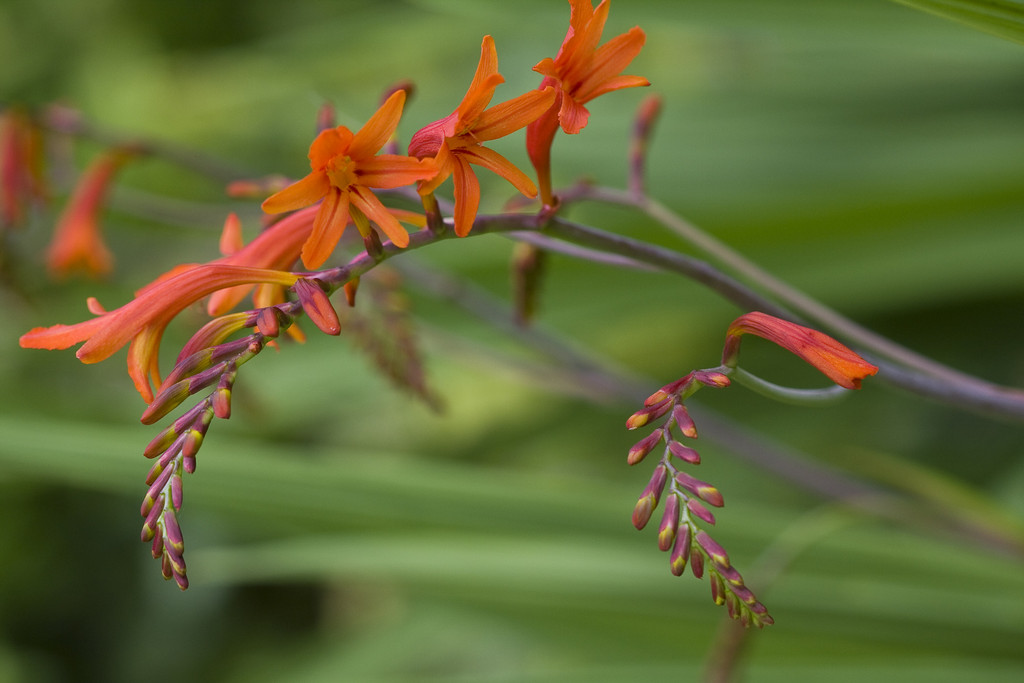
Crocosmia paniculata

RHS Plant Profile
Aunt Eliza
Aunt Eliza RHS

Synonyms

Curtonus paniculatus
Antholyza coccinea
Antholyza paniculata

Bulbs Herbaceous Perennial

A cormous perennial producing strongly-pleated, olive green leaves to 1m long. In late summer it produces downward curved, orange flowers to 6cm long that are borne alternately on branched, zigzagged stems

Position

Full sun, Partial shade

Soil Types

Chalk, Clay, Loam, Sand

Max Height

1-1.5 metres

Max Spread

0.1-0.5 metres

Size

Time to Maturity
2–5 years
Max Spread
0.1-0.5 metres
Max Height
1-1.5 metres

Growing Conditions

Chalk Clay Loam Sand
Moisture
Moist but well–drained
pH
Acid or Alkaline or Neutral

Position

Full sun Partial shade
Aspect
South–facing or West–facing or East–facing
Exposure
Exposed or Sheltered
Hardiness
H5

Colour & Scent

Season Stem Flower Foliage Fruit
Spring
Summer
Autumn
Winter

Botanical Details

Family
Iridaceae
Native to GB/Ireland
No
Foliage
Deciduous
Habit
Clump forming
Genus
Crocosmia are deciduous cormous perennials with erect, sword-shaped leaves and branched spikes of showy, funnel-shaped flowers in summer
Name Status
Correct
Plant Range
South Africa

How to Grow

Cultivation

Grow in a moderately fertile, humus-rich soil that is moist but well-drained. Thrives in sun or partial shade. Mulch first winter. In colder areas prone to periods of prolonged frost protect with dry mulch such as bark. Has the potential to become a nuisance in some gardens if not managed well

Propagation

Propagate by division in spring just before growth starts, plant corms 8-10cm deep

Suggested planting locations and garden types

  • Coastal
  • Cottage and informal garden
  • Cut flowers
  • Flower borders and beds

Pruning

Cut back faded foliage in autumn or spring

Pests

May be susceptible to glasshouse red spider mite

Diseases

Generally disease-free