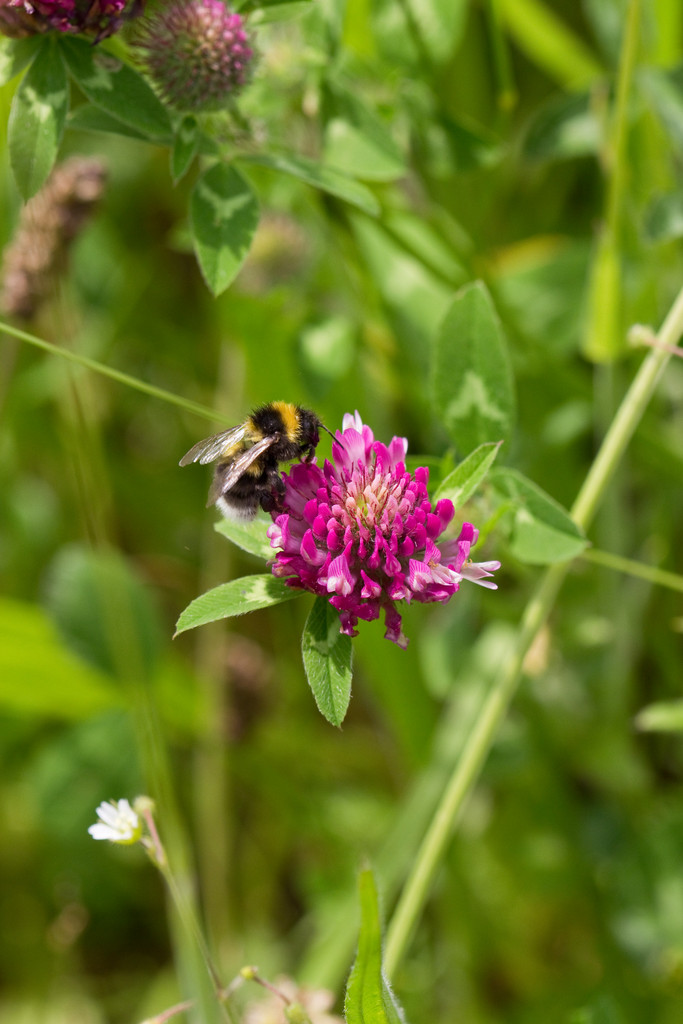
Trifolium pratense

RHS Plant Profile
red clover
red clover RHS

Other common names

bee bread, broad-leaved clover, clover grass, common clover, cow grass, marl grass, pinkies, purple clover, purplewort, suckles, sugar plum

Plants for pollinators
Herbaceous Perennial

A red clover that reaches 30-50cm in height and bears trifoliate leaves and rounded clusters of pinkish-red flowers 2-3cm across from May to October. Traditionally an element of hay meadows where it fixes nitrogen in its roots. A great source of nectar, especially for bees

Position

Full sun

Soil Types

Clay, Loam, Sand

Max Height

0.5-1 metres

Max Spread

0.1-0.5 metres

Size

Time to Maturity
2–5 years
Max Spread
0.1-0.5 metres
Max Height
0.5-1 metres

Growing Conditions

Clay Loam Sand
Moisture
Moist but well–drained or Well–drained
pH
Acid or Neutral

Position

Full sun
Aspect
East–facing or South–facing or West–facing
Exposure
Sheltered
Hardiness
H7
Drought Resistance
Yes

Colour & Scent

Season Stem Flower Foliage Fruit
Spring
Summer
Autumn
Winter

Botanical Details

Family
Fabaceae
Native to GB/Ireland
Yes
Foliage
Deciduous
Habit
Bushy
Genus
Trifolium are erect or creeping annuals, biennials and herbaceous perennials with trefoil leaves and small, pea-like flowers usually in clusters or short spikes
Name Status
Correct
Plant Range
Europe, Asia, N Africa

How to Grow

Cultivation

Prefers a sunny site and a slightly acid soil with low levels of nitrogen (ie un-manured ground). Naturally occurs in grassland. See clover in lawns for more information. May be grown as green manure; see our video How to grow and sow green manure for advice

Propagation

Propagate by seed

Suggested planting locations and garden types

  • Wildflower meadow
  • Wildlife gardens

Pruning

No pruning required

Pests

Generally pest-free

Diseases

Generally disease-free