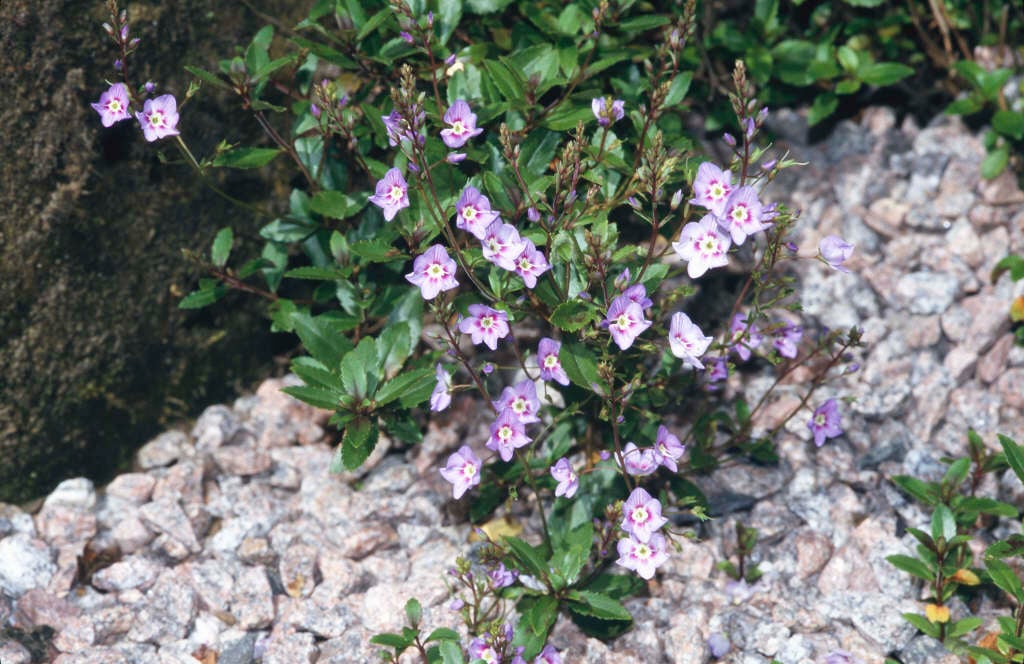
Veronica catarractae 'Delight' (P)

RHS Plant Profile
parahebe 'Delight'
parahebe 'Delight' RHS 2002

Synonyms

Veronica 'Greencourt'
Parahebe catarractae 'Porlock Purple'
Parahebe 'Greencourt'
Veronica 'Porlock Purple'
Hebe 'Porlock Purple'
Parahebe catarractae 'Delight'

Award of Garden Merit
Shrubs

A low-growing semi-evergreen dwarf sub-shrub to 30cm, with strongly toothed, narrow-ovate leaves and erect racemes of small white flowers with conspicuous magenta veins

Position

Full sun

Soil Types

Chalk, Clay, Loam, Sand

Max Height

0.1-0.5 metres

Max Spread

0.1-0.5 metres

Size

Time to Maturity
5–10 years
Max Spread
0.1-0.5 metres
Max Height
0.1-0.5 metres

Growing Conditions

Chalk Clay Loam Sand
Moisture
Moist but well–drained or Well–drained
pH
Acid or Alkaline or Neutral

Position

Full sun
Aspect
South–facing or North–facing or West–facing or East–facing
Exposure
Exposed or Sheltered
Hardiness
H4
Drought Resistance
Yes

Colour & Scent

Season Stem Flower Foliage Fruit
Spring
Summer
Autumn
Winter

Botanical Details

Family
Plantaginaceae
Native to GB/Ireland
No
Foliage
Evergreen
Habit
Matforming
Genus
Veronica can be annuals, perennials or sub-shrubs with paired leaves and small flowers usually in terminal or axillary racemes or spikes
Name Status
Accepted
Horticultural Group
This genus has changed from Parahebe to Veronica

How to Grow

Cultivation

Grows well in poor well-drained soil in full sun

Propagation

Propagate by seed or semi-hardwood cuttings

Suggested planting locations and garden types

  • Coastal
  • Gravel garden
  • Rock garden
  • Low Maintenance
  • Ground cover

Pruning

No pruning required

Pests

May be susceptible to aphids

Diseases

May be susceptible to downy mildews, fungal leaf spot, fungal rot, Phytophthora and sometimes honey fungus