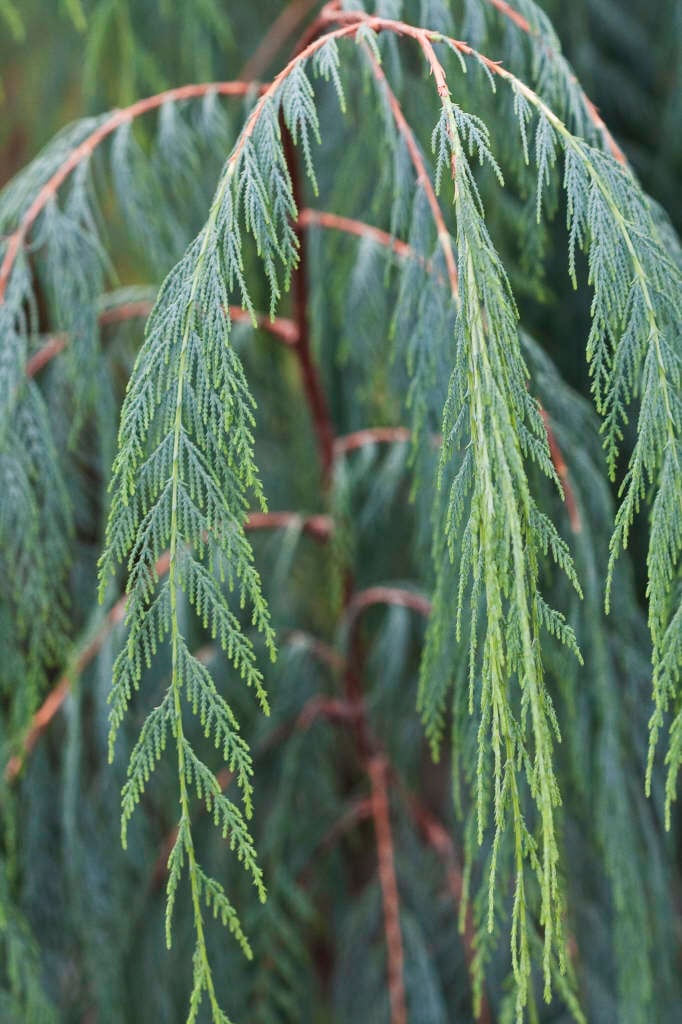
Cupressus cashmeriana

RHS Plant Profile
Kashmir cypress
Kashmir cypress RHS

Other common names

Bhutan cypress

Synonyms

Cupressus torulosa 'Cashmeriana'
Cupressus assamica
Cupressus darjeelingensis
Cupressus himalaica
Cupressus pendula Griff.

Award of Garden Merit
Conservatory Greenhouse Conifers

An evergreen coniferous tree of conical outline, becoming broader with age, with long, flat, pendulous sprays of vivid glaucous blue scale-leaves

Position

Full sun

Soil Types

Chalk, Loam, Sand

Max Height

Higher than 12 metres

Max Spread

4-8 metres

Size

Time to Maturity
20–50 years
Max Spread
4-8 metres
Max Height
Higher than 12 metres

Growing Conditions

Chalk Loam Sand
Moisture
Well–drained
pH
Acid or Alkaline or Neutral

Position

Full sun
Aspect
South–facing or West–facing
Exposure
Sheltered
Hardiness
H3

Colour & Scent

Season Stem Flower Foliage Fruit
Spring
Summer
Autumn
Winter

Botanical Details

Family
Cupressaceae
Native to GB/Ireland
No
Foliage
Evergreen
Habit
Pendulous weeping
Genus
Cupressus are vigorous, evergreen trees with flaking or scaly bark, often with columnar or narrowly ovoid crowns, small, often aromatic, scale-like leaves and small, spherical female cones
Name Status
Correct
Plant Range
Bhutan

How to Grow

Cultivation

Under glass grow in peat-free, loam-based potting compost in full light, with good ventilation. Outdoors grow in any well-drained soil in full sun. Shelter from cold drying winds

Propagation

Propagate by seed in containers in a cold frame, in spring. Root semi-ripe cuttings in late summer

Suggested planting locations and garden types

  • Coastal
  • Architectural

Pruning

Pruning group 1

Pests

May be susceptible to aphids, especially Cypress aphid which is active during summer and may cause dieback

Diseases

May be susceptible to honey fungus or phytophthora. Cankers may cause the death of twigs and ultimately entire trees