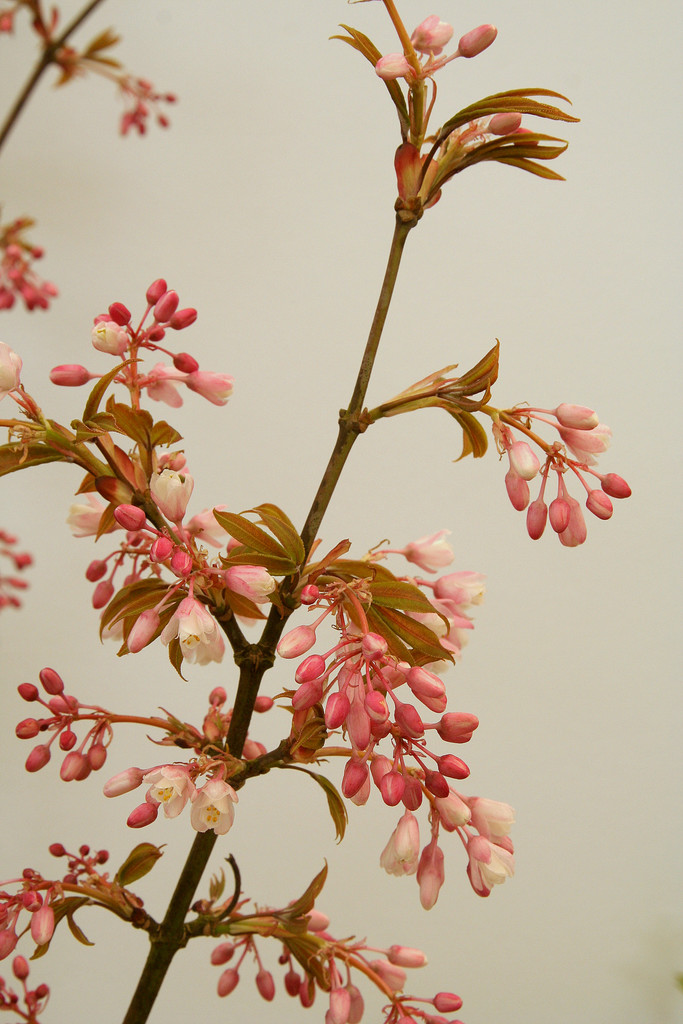
Staphylea holocarpa var. rosea

RHS Plant Profile
rose-coloured Chinese bladdernut
rose-coloured Chinese bladdernut RHS

Synonyms

Staphylea holocarpa 'Rosea'

Shrubs Trees

'Rosea' is an upright shrub, or small, spreading tree, with blue-green leaves, bronze in spring, composed of three leaflets up to 10cm long. Small, hanging clusters of pink, bell-shaped flowers appear in mid- to late spring before the leaves, followed by greenish-white, inflated fruit up to 5cm long

Position

Full sun, Partial shade

Soil Types

Chalk, Clay, Loam, Sand

Max Height

8-12 metres

Max Spread

4-8 metres

Size

Time to Maturity
20–50 years
Max Spread
4-8 metres
Max Height
8-12 metres

Growing Conditions

Chalk Clay Loam Sand
Moisture
Moist but well–drained
pH
Acid or Alkaline or Neutral

Position

Full sun Partial shade
Aspect
South–facing or North–facing or West–facing or East–facing
Exposure
Exposed or Sheltered
Hardiness
H5

Colour & Scent

Season Stem Flower Foliage Fruit
Spring
Summer
Autumn
Winter

Botanical Details

Family
Staphyleaceae
Native to GB/Ireland
No
Foliage
Deciduous
Habit
Bushy
Genus
Staphylea are deciduous shrubs or small trees producing hanging clusters of bell- or cup-shaped, white, cream or pink flowers, followed by bladder-like, two- or three-lobed fruit
Name Status
Correct
Plant Range
China (Yunnan to Hubei)

How to Grow

Cultivation

Grow in any moist, well-drained soil in sun or semi-shade

Propagation

Propagate by softwood cuttings in early summer or semi-ripe cuttings in midsummer, both with bottom heat

Suggested planting locations and garden types

  • Cottage and informal garden
  • Low Maintenance
  • Flower borders and beds

Pests

Generally pest-free

Diseases

Generally disease-free