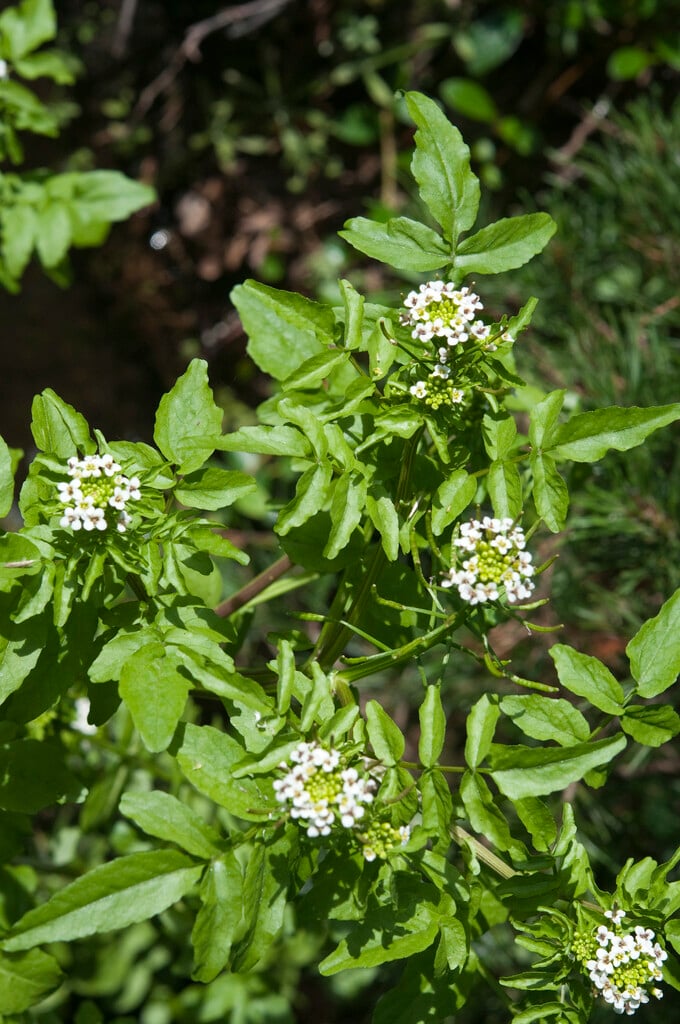
Nasturtium officinale

RHS Plant Profile
common watercress

Other common names

bank cress, brooklime, craches, flixweed, fluxweed, water grass, water radish, watercress, well cress, water cress

Synonyms

Cardamine fontanum
Rorippa nasturtium-aquaticum
Rorippa nasturtium
Nasturtium aquaticum

Plants for pollinators
Aquatic Bogs Herbs - Culinary

A fast-growing, aquatic perennial to 20cm in height, forming dense colonies of floating and submerged rooting stems and edible foliage. A popular salad crop with oval, wavy-edged rich dark green leaves, and small white flowers from late spring to midsummer

Position

Full sun, Partial shade

Soil Types

Clay, Loam, Sand

Max Height

0.1-0.5 metres

Max Spread

0.5-1 metres

Size

Time to Maturity
1–2 years
Max Spread
0.5-1 metres
Max Height
0.1-0.5 metres

Growing Conditions

Clay Loam Sand
Moisture
Poorly–drained
pH
Acid or Alkaline or Neutral

Position

Full sun Partial shade
Aspect
East–facing or South–facing or West–facing
Exposure
Exposed or Sheltered
Hardiness
H6

Colour & Scent

Season Stem Flower Foliage Fruit
Spring
Summer
Autumn
Winter

Botanical Details

Family
Brassicaceae
Native to GB/Ireland
Yes
Foliage
Deciduous, Semi evergreen
Habit
Floating, Submerged, Trailing
Genus
Name Status
Correct

How to Grow

Cultivation

Grow in humus-rich, wet soil or soil that is reliably moist through summer. See pond plants and bog gardens for further advice

Propagation

Propagate by seed, or rooted runners in spring

Suggested planting locations and garden types

  • Cottage and informal garden
  • Wildlife gardens

Pruning

Harvest by pinching out regularly for a supply of young leaves

Pests

May be susceptible to slugs and snails, aphids and caterpillars

Diseases

May be susceptible to a leaf spot and root rots