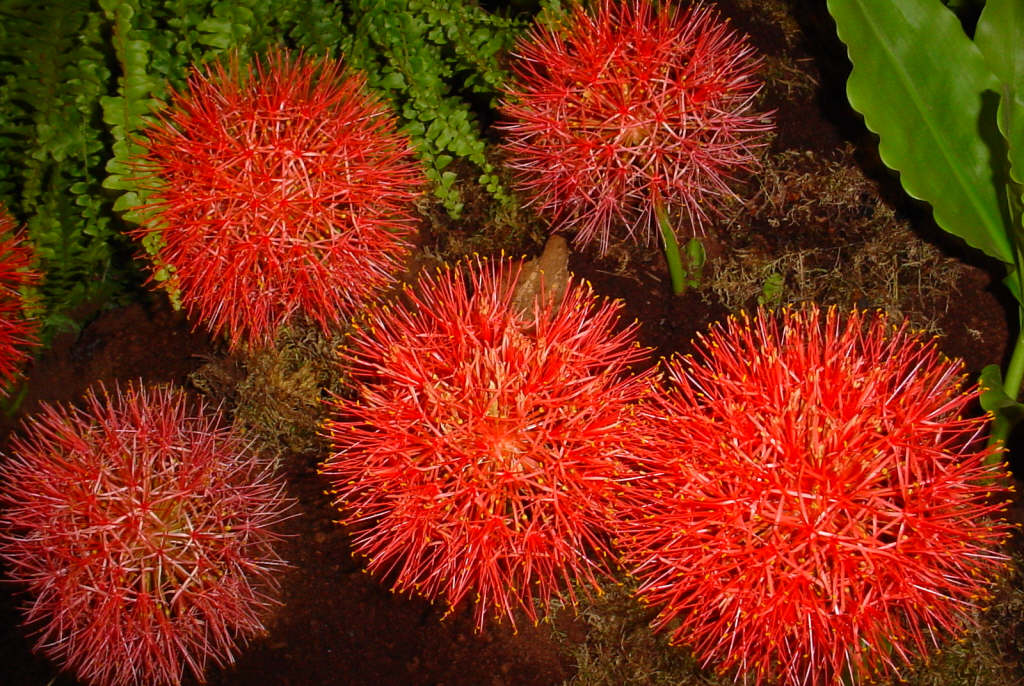
Scadoxus multiflorus subsp. multiflorus
blood flower
A bulbous perennial 60cm tall, with broadly lance-shaped leaves to 30cm long, and globose umbels to 15cm across, composed of narrow-petalled scarlet flowers with prominent stamens, followed by orange berries

Size
Ultimate height
0.5–1 metresTime to ultimate height
2–5 yearsUltimate spread
0.1–0.5 metresGrowing conditions
Moisture
Well–drainedpH
Alkaline, NeutralColour & scent
| Stem | Flower | Foliage | Fruit | |
| Spring | ||||
|---|---|---|---|---|
| Summer | Red | |||
| Autumn | Orange | |||
| Winter |
Position
- Full sun
- Partial shade
Aspect
South–facing or West–facing
Exposure
Sheltered Hardiness
H1BBotanical details
- Family
- Amaryllidaceae
- Native to GB / Ireland
- No
- Foliage
- Deciduous
- Habit
- Bushy
- Potentially harmful
- Ornamental bulbs - not to be eaten. Wear gloves and other protective equipment when handling. Pets: Ornamental bulbs - not to be eaten - see the HTA guide to potentially harmful plants for further information and useful contact numbers
- Genus
Scadoxus are bulbous, rhizomatous, usually evergreen perennials, with spirally arranged, lance-shaped or ovate leaves and erect stems bearing terminal umbels of showy red flowers sometimes with colourful bracts, followed by red to yellow berries
- Name status
Unresolved
How to grow
Cultivation
Plant bulbs with the necks just above the surface, when dormant, in moderately fertile soil. Under glass grow in peat-free, loam-based potting compost with added leaf mould and grit in full light with shade from hot sun. Flowering will be prolonged if light levels are reduced when the buds open. Water freely when in growth and apply a dilute balanced liquid fertiliser monthly. Keep just moist when dormant and do not pot on regularly as flowering is best when congested
Propagation
Propagate by seed, sow seeds as soon as ripe and germinate at 19-24°C (66-75°F). Remove offsets in early spring
Suggested planting locations and garden types
- Patio and container plants
Pruning
No pruning required
Pests
Generally pest-free
Diseases
Generally disease-free
Get involved
The RHS is the UK’s gardening charity, helping people and plants to grow - nurturing a healthier, happier world, one person and one plant at a time.