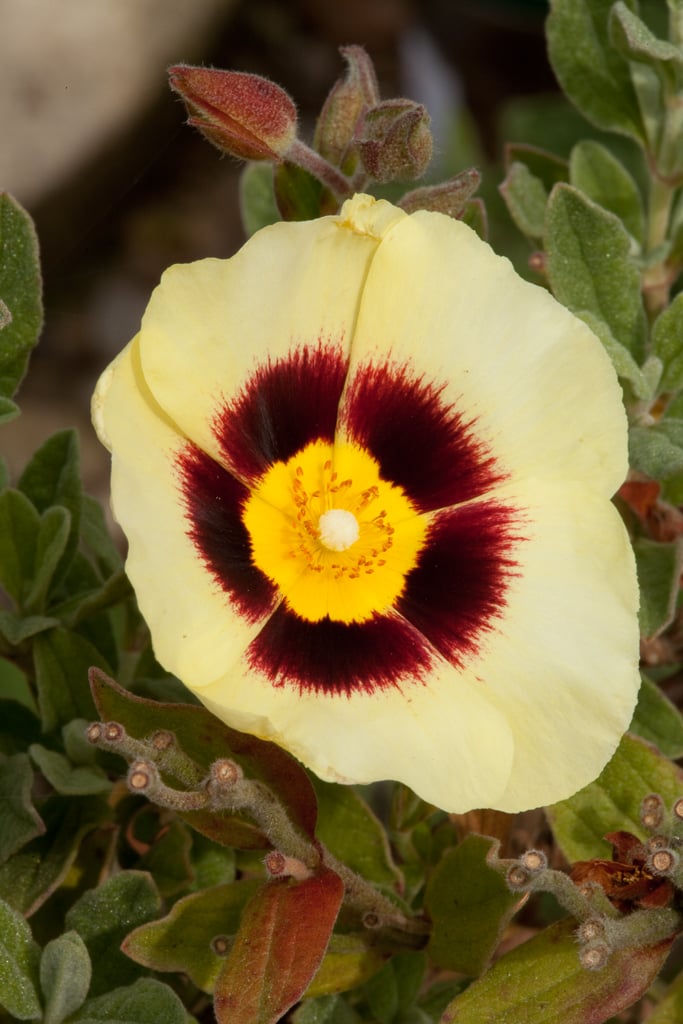
Cistus × revolii H.J. Coste & Soulié subsp. grandiflorus 'Wintonensis'

RHS Plant Profile
Winton rock rose
Winton rock rose John Fielding

Other common names

Winton halimiocistus

Synonyms

Halimium wintonense
Cistus × wintonensis
Cistus × revolii subsp. grandiflorus (Demoly) Demoly
× Halimiocistus wintonensis
Cistus wintonensis

Award of Garden Merit
Shrubs

A spreading, bushy dwarf evergreen shrub with narrowly elliptic, grey-green leaves. Flowers 5cm wide, white, each petal with a crimson zone above the yellow base, opening in late spring and early summer

Position

Full sun

Soil Types

Chalk, Loam, Sand

Max Height

0.1-0.5 metres

Max Spread

0.5-1 metres

Size

Time to Maturity
2–5 years
Max Spread
0.5-1 metres
Max Height
0.1-0.5 metres

Growing Conditions

Chalk Loam Sand
Moisture
Well–drained
pH
Acid or Alkaline or Neutral

Position

Full sun
Aspect
West–facing or South–facing
Exposure
Sheltered
Hardiness
H4

Colour & Scent

Season Stem Flower Foliage Fruit
Spring
Summer
Autumn
Winter

Botanical Details

Family
Cistaceae
Native to GB/Ireland
No
Foliage
Evergreen
Habit
Bushy
Genus
Cistus are evergreen shrubs with simple, opposite leaves and 5-petalled, bowl-shaped, white, pink or purplish flowers, each lasting a single day, over a long period in summer
Name Status
Accepted

How to Grow

Cultivation

Grow in well-drained, sandy, poor soil in full sun. They are less hardy if grown in shade or very fertile soil. Shelter from cold, drying winds

Propagation

Root softwood cuttings from late spring to early summer; semi-ripe cuttings from midsummer to late winter

Suggested planting locations and garden types

  • Coastal
  • City and courtyard gardens
  • Cottage and informal garden
  • Gravel garden
  • Patio and container plants
  • Rock garden
  • Wall side borders
  • Flower borders and beds
  • Garden edging

Pruning

Pruning group 9 but keep pruning to a minimum, pruning is rarely needed

Pests

Generally pest-free

Diseases

Generally disease-free