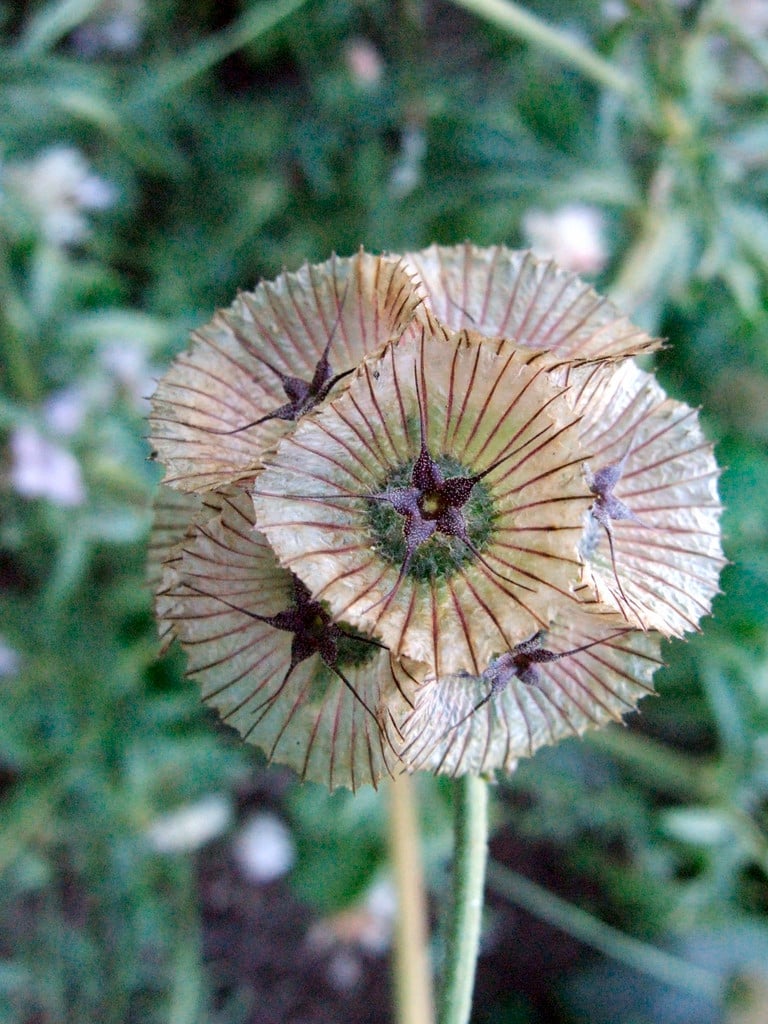
Lomelosia stellata

RHS Plant Profile
starflower scabious
starflower scabious RHS

Other common names

drumstick scabious

Synonyms

Scabiosa stellata

Annual Biennial

An erect, branching annual up to 45cm tall, with lance-shaped or pinnately lobed leaves. Solitary, pale blue, spherical flower heads to 3cm across, are followed by papery, silvery cream seed-heads

Position

Full sun

Soil Types

Chalk, Loam, Sand

Max Height

0.1-0.5 metres

Max Spread

0.1-0.5 metres

Size

Time to Maturity
1 year
Max Spread
0.1-0.5 metres
Max Height
0.1-0.5 metres

Growing Conditions

Chalk Loam Sand
Moisture
Well–drained
pH
Alkaline or Neutral

Position

Full sun
Aspect
South–facing or West–facing
Exposure
Exposed or Sheltered
Hardiness
H4

RHS Recommended: for People & Planet

Growing conditions for maximum benefit

This plant will provide the maximum benefits if it is healthy and allowed to grow to maturity

For Bio-Diversity

  • Plants for Pollinators

Colour & Scent

Season Stem Flower Foliage Fruit
Spring
Summer
Autumn
Winter

Botanical Details

Family
Caprifoliaceae
Native to GB/Ireland
No
Foliage
Deciduous
Habit
Bushy
Genus
A genus of over 60 flowering perennial and annual flowering plants with grey-green to green lance-shaped, lobed or divided leaves and pincushion-shaped lavender, blue or white flowers
Name Status
Correct
Plant Range
SW Europe, N Africa

How to Grow

Cultivation

Grow in moderately fertile, well-drained, neutral to slightly alkaline soil in full sun

Propagation

Propagate by seed sown in gentle heat in early spring

Suggested planting locations and garden types

  • Cottage and informal garden
  • Wildflower meadow
  • Wildlife gardens
  • Flower borders and beds
  • Cut flowers

Pruning

No pruning required

Pests

Generally pest-free

Diseases

Generally disease-free