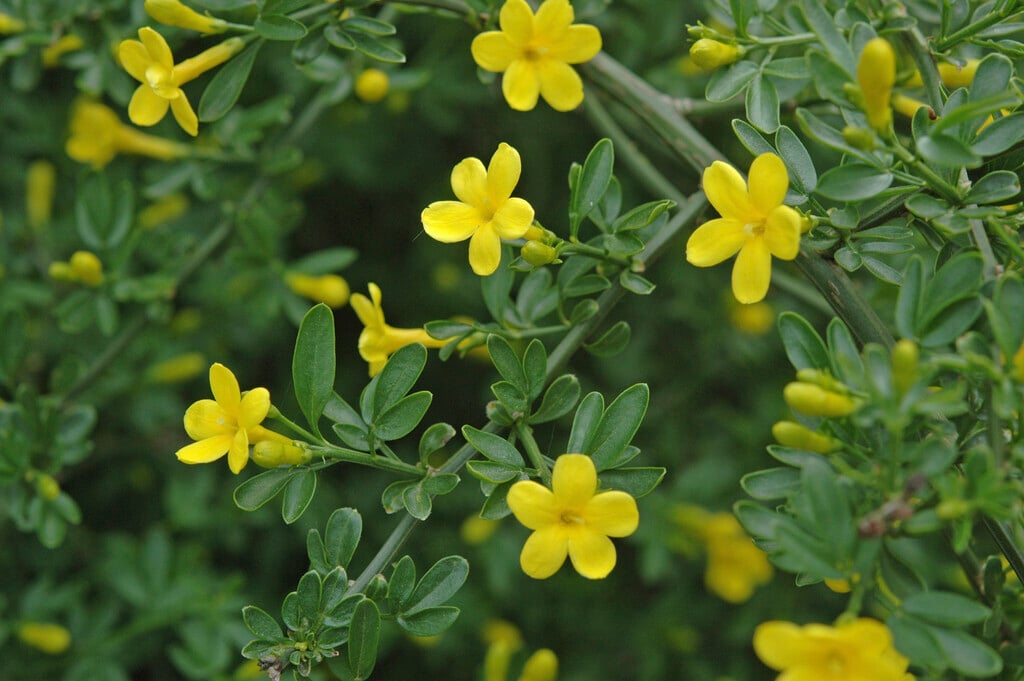
Jasminum fruticans

RHS Plant Profile
common yellow jasmine
common yellow jasmine visionspictures.com

Other common names

make-bate

Shrubs

Semi-evergreen shrub about 1.5m tall, with an upright habit, green angled stems and alternate green leaves composed of narrow leaflets 2cm long. Slightly fragrant, yellow flowers 1.5cm across, are produced in clusters at the end of the stems during summer, followed by black fruits

Position

Full sun, Partial shade

Soil Types

Chalk, Loam, Sand

Max Height

1-1.5 metres

Max Spread

1-1.5 metres

Size

Time to Maturity
5–10 years
Max Spread
1-1.5 metres
Max Height
1-1.5 metres

Growing Conditions

Chalk Loam Sand
Moisture
Well–drained
pH
Acid or Alkaline or Neutral

Position

Full sun Partial shade
Aspect
South–facing or West–facing or East–facing
Exposure
Sheltered
Hardiness
H5

Colour & Scent

Fragrance Flower
Season Stem Flower Foliage Fruit
Spring
Summer
Autumn
Winter

Botanical Details

Family
Oleaceae
Native to GB/Ireland
No
Foliage
Semi evergreen
Habit
Bushy
Genus
Jasminum are evergreen or deciduous shrubs, many climbing by twining stems bearing usually pinnate leaves, and star-shaped white, pink or yellow flowers, which are sometimes very fragrant. Fruit a black berry
Name Status
Correct
Plant Range
Mediterranean, Asia Minor

How to Grow

Cultivation

Grow in well-drained soil in full sun or light shade in a sheltered position. See Jasmine cultivation

Propagation

Propagate by semi-ripe cuttings in summer or layering in autumn

Suggested planting locations and garden types

  • City and courtyard gardens
  • Coastal
  • Cottage and informal garden
  • Climber and wall shrubs
  • Flower borders and beds
  • Wall side borders

Pruning

Pruning group 2 or can be trained as a wall shrub

Pests

May be susceptible to aphids, glasshouse red spider mite and mealybugs

Diseases

May be susceptible to honey fungus (rarely)