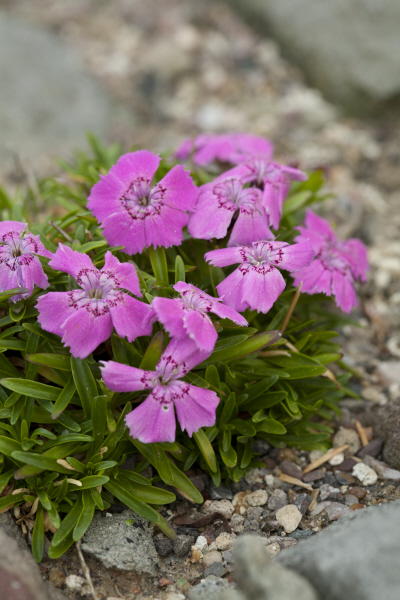
Dianthus alpinus

RHS Plant Profile
alpine pink
alpine pink Dorling Kindersley Ltd
Award of Garden Merit
Alpine Rockery Herbaceous Perennial

A mat-forming hardy perennial with dark green foliage and solitary, pale-spotted, deep pink to cerise flowers 4cm wide, on stalks 2-10cm tall; tends to be short-lived

Position

Full sun

Soil Types

Chalk, Loam, Sand

Max Height

Up to 10 cm

Max Spread

0-0.1 metre

Size

Time to Maturity
2–5 years
Max Spread
0-0.1 metre
Max Height
Up to 10 cm

Growing Conditions

Chalk Loam Sand
Moisture
Well–drained
pH
Alkaline or Neutral

Position

Full sun
Aspect
South–facing or West–facing or East–facing
Exposure
Exposed or Sheltered
Hardiness
H6

Colour & Scent

Season Stem Flower Foliage Fruit
Spring
Summer
Autumn
Winter

Botanical Details

Family
Caryophyllaceae
Native to GB/Ireland
No
Foliage
Evergreen
Habit
Matforming
Potentially harmful
Humans/Pets: Skin allergenwear gloves and other protective equipment when handling. For further information and contact numbers regarding pets, see the HTA guide to potentially harmful plants
Genus
Dianthus can be annuals, evergreen perennials or subshrubs with narrow, often greyish leaves and showy flowers that are frequently fragrant
Name Status
Correct
Plant Range
E Alps

How to Grow

Cultivation

Grow in well-drained, neutral to alkaline soil in full sun. Well-suited to a rock garden or the edge of a border

Propagation

Propagate by seed

Suggested planting locations and garden types

  • Gravel garden
  • Cottage and informal garden
  • Rock garden
  • Flower borders and beds

Pruning

Deadhead as required

Pests

May be susceptible to slugs and aphids

Diseases

May be susceptible to powdery mildews, a rust, a virus and fusarium wilt