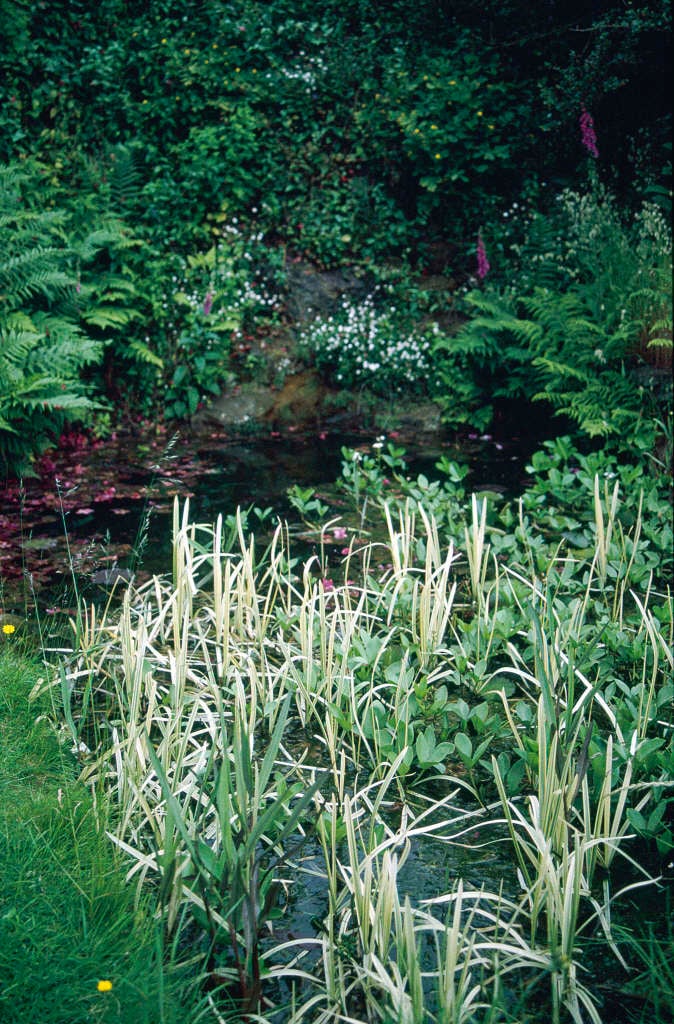
Glyceria maxima var. variegata (v)

RHS Plant Profile
variegated reed sweet-grass
variegated reed sweet-grass RHS 1999

Synonyms

Glyceria spectabilis 'Variegata'
Glyceria aquatica variegata

Aquatic Grass Like Bogs

A strong-growing rhizomatous perennial forming extensive stands of narrowly strap-shaped leaves striped with cream and sometimes tinged with pink, and with purplish-green flowering panicles in late summer

Position

Full sun

Soil Types

Clay, Loam, Sand

Max Height

0.5-1 metres

Max Spread

1.5-2.5 metres

Size

Time to Maturity
2–5 years
Max Spread
1.5-2.5 metres
Max Height
0.5-1 metres

Growing Conditions

Clay Loam Sand
Moisture
Poorly–drained
pH
Acid or Alkaline or Neutral

Position

Full sun
Aspect
South–facing or West–facing
Exposure
Exposed or Sheltered
Hardiness
H6

Colour & Scent

Season Stem Flower Foliage Fruit
Spring
Summer
Autumn
Winter

Botanical Details

Family
Poaceae
Native to GB/Ireland
No
Foliage
Deciduous
Habit
Suckering
Genus
Glyceria are vigorous, spreading, moisture-loving or aquatic, rhizomatous perennial grasses, with narrowly strap-shaped leaves and green or purple-tinged flowering panicles in late summer
Name Status
Unresolved

How to Grow

Cultivation

Grow in any reliably moist, fertile soil or in water up to 15cm deep, in full sun. Divide every few years to prevent congestion; has the potential to become a nuisance if not managed well. See pond plants and bog gardens for further advice

Propagation

Propagate by division in spring

Suggested planting locations and garden types

  • Wildlife gardens
  • Low Maintenance

Pruning

Leaves can be cut back when they die off in late autumn

Pests

Generally pest-free

Diseases

Generally disease-free