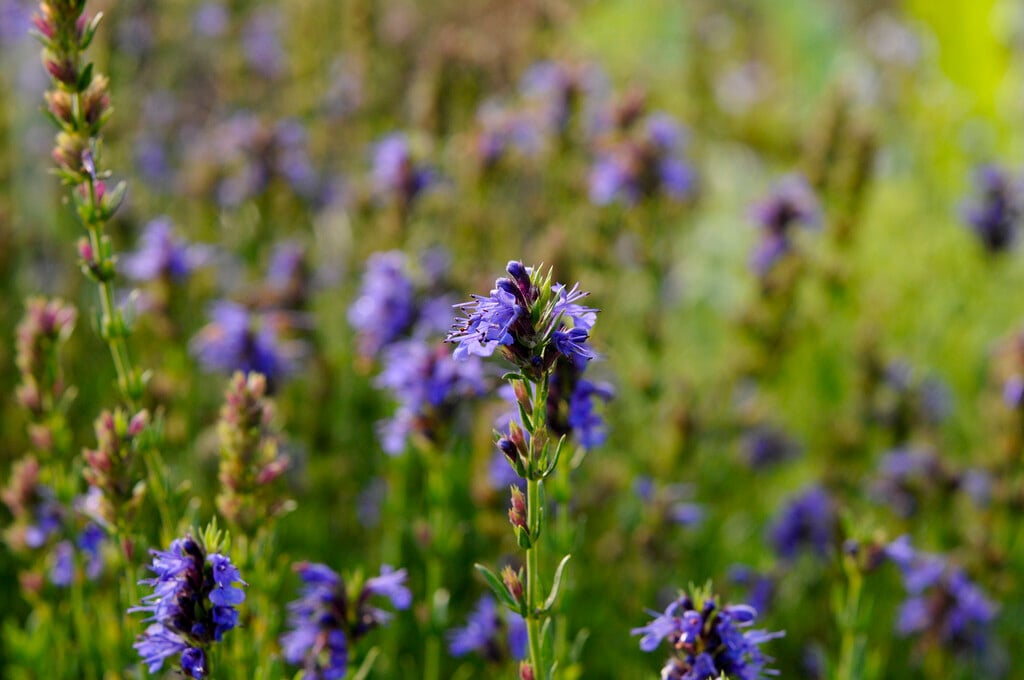
Hyssopus officinalis subsp. aristatus

RHS Plant Profile
rock hyssop
rock hyssop visionspictures.com

Other common names

hyssop

Synonyms

Hyssopus aristatus

Plants for pollinators
Herbaceous Perennial

A compact, semi-evergreen sub-shrub to around 60cm high, with a dense, upright habit and aromatic, linear leaves. Slender spikes of funnel-shaped blue flowers are produced in summer and early autumn

Position

Full sun, Partial shade

Soil Types

Chalk, Loam, Sand

Max Height

0.5-1 metres

Max Spread

0.5-1 metres

Size

Time to Maturity
5–10 years
Max Spread
0.5-1 metres
Max Height
0.5-1 metres

Growing Conditions

Chalk Loam Sand
Moisture
Well–drained
pH
Alkaline or Neutral

Position

Full sun Partial shade
Aspect
South–facing or West–facing
Exposure
Exposed or Sheltered
Hardiness
H7

Colour & Scent

Season Stem Flower Foliage Fruit
Spring
Summer
Autumn
Winter

Botanical Details

Family
Lamiaceae
Native to GB/Ireland
No
Foliage
Semi evergreen
Habit
Columnar upright
Genus
Hyssopus can be herbaceous perennials or evergreen shrubs, with linear, aromatic leaves and whorls of tubular, 2-lipped flowers in spike-like inforescences
Name Status
Correct
Plant Range
France, Spain, Balkans

How to Grow

Cultivation

Grow in fertile, well-drained, alkaline to neutral soil in full sun

Propagation

Propagate by seed or by softwood cuttings in summer

Suggested planting locations and garden types

  • City and courtyard gardens
  • Cottage and informal garden
  • Gravel garden
  • Patio and container plants
  • Rock garden
  • Wildlife gardens
  • Wall side borders

Pruning

Pruning group 10 in mid-spring

Pests

May be susceptible to sage leafhopper

Diseases

Generally disease-free