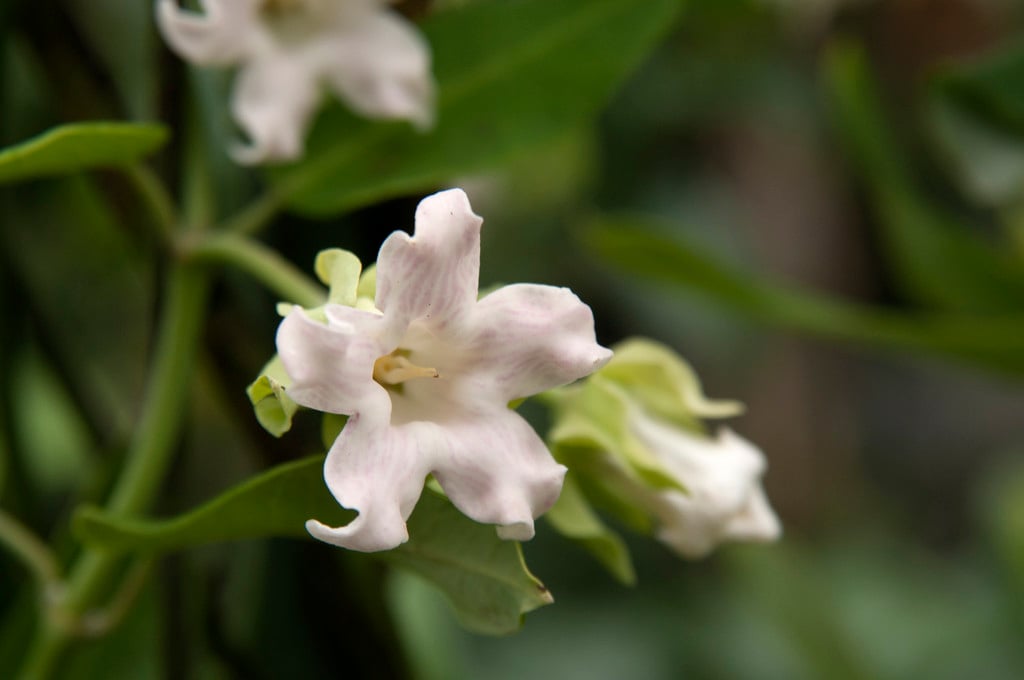
Araujia sericifera

RHS Plant Profile
cruel plant
cruel plant RHS

Other common names

white bladderflower

Synonyms

Araujia albens

Climber Wall Shrub Conservatory Greenhouse

A fast-growing, twining, evergreen climber with narrowly oval leaves 10cm long. From late summer to autumn it bears small sprays of bell-shaped, scented, white or pale pink flowers. Sticky pollen masses temporarily trap visiting moths, hence the common name

Position

Full sun, Partial shade

Soil Types

Chalk, Loam, Sand

Max Height

8-12 metres

Max Spread

4-8 metres

Size

Time to Maturity
2–5 years
Max Spread
4-8 metres
Max Height
8-12 metres

Growing Conditions

Chalk Loam Sand
Moisture
Moist but well–drained or Well–drained
pH
Acid or Alkaline or Neutral

Position

Full sun Partial shade
Aspect
South–facing or West–facing
Exposure
Sheltered
Hardiness
H2

Colour & Scent

Fragrance Flower
Season Stem Flower Foliage Fruit
Spring
Summer
Autumn
Winter

Botanical Details

Family
Apocynaceae
Native to GB/Ireland
No
Foliage
Evergreen
Habit
Climbing
Genus
Araujia are evergreen climbing shrubs with twining stems containing copious white latex, simple, paired leaves and fragrant salver-shaped flowers borne in umbels in the leaf axils, followed by large, inflated fruits containing silky-tufted seeds
Name Status
Correct
Plant Range
South America

How to Grow

Cultivation

Under glass grow in coarse, peat-free, loam-based compost in full light. Where temperatures do not fall below zero grow outdoors in well-drained, moderately fertile soil in sun or semi-shade

Propagation

Propagate by seed sown when ripe, or in spring. Root semi-ripe cuttings of lateral shoots with bottom heat in late summer

Suggested planting locations and garden types

  • Mediterranean climate plants
  • City and courtyard gardens
  • Wall side borders

Pruning

Pruning group 11, in early spring

Pests

May be susceptible to glasshouse red spider mite

Diseases

Generally disease-free