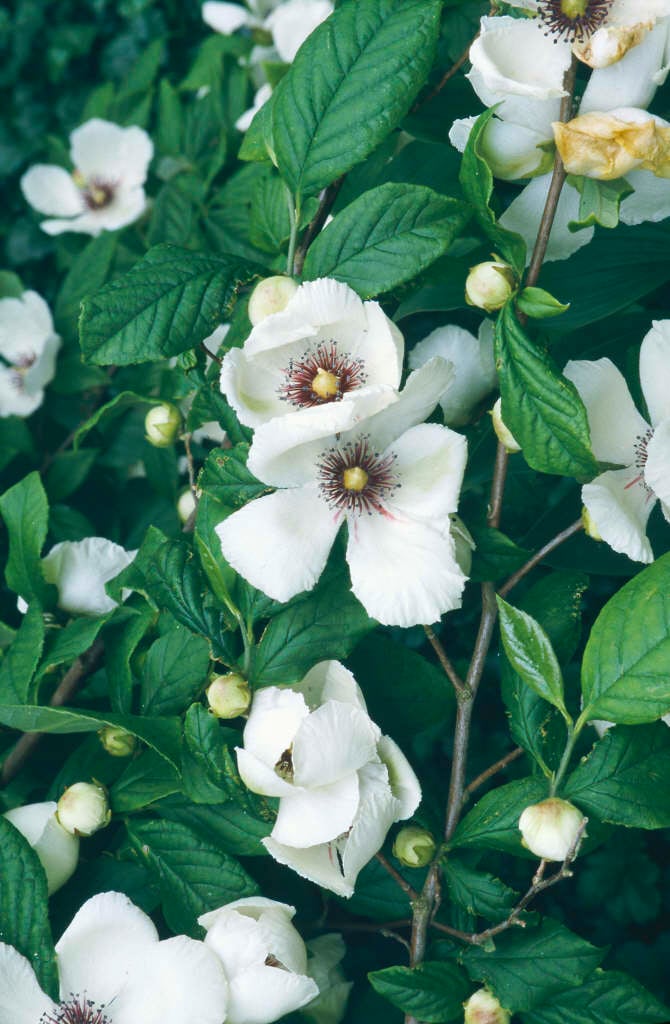
Stewartia malacodendron

RHS Plant Profile
silky camellia
silky camellia RHS 2002
Award of Garden Merit
Shrubs Trees

A large deciduous shrub or small tree with ovate leaves and, in summer, solitary white flowers to 8cm across, with conspicuous purple stamens

Position

Full shade, Partial shade

Soil Types

Loam, Sand

Max Height

4-8 metres

Max Spread

2.5-4 metres

Size

Time to Maturity
10–20 years
Max Spread
2.5-4 metres
Max Height
4-8 metres

Growing Conditions

Loam Sand
Moisture
Moist but well–drained or Well–drained
pH
Acid or Neutral

Position

Full shade Partial shade
Aspect
South–facing or West–facing or East–facing
Exposure
Sheltered
Hardiness
H5

Colour & Scent

Season Stem Flower Foliage Fruit
Spring
Summer
Autumn
Winter

Botanical Details

Family
Theaceae
Native to GB/Ireland
No
Foliage
Deciduous
Habit
Bushy
Genus
Stewartia are deciduous trees or shrubs, often with attractive peeling bark, ovate leaves and showy white flowers; good autumn colour
Name Status
Correct
Plant Range
SE USA

How to Grow

Cultivation

Grows well in woodland conditions, favouring a moist, humus-rich, lime-free soil in partial shade. The roots must be fully shaded from hot sun and they resent disturbance or transplanting

Propagation

Propagate by softwood cuttings in early summer or semi-hardwood cuttings in late-summer. Propagate by seed sown in containers in a cold-frame in autumn

Suggested planting locations and garden types

  • Architectural
  • Cottage and informal garden
  • City and courtyard gardens

Pruning

Pruning group 1

Pests

Generally pest-free

Diseases

May be susceptible to honey fungus in gardens where it is present but insufficient data to determine degree of susceptibility