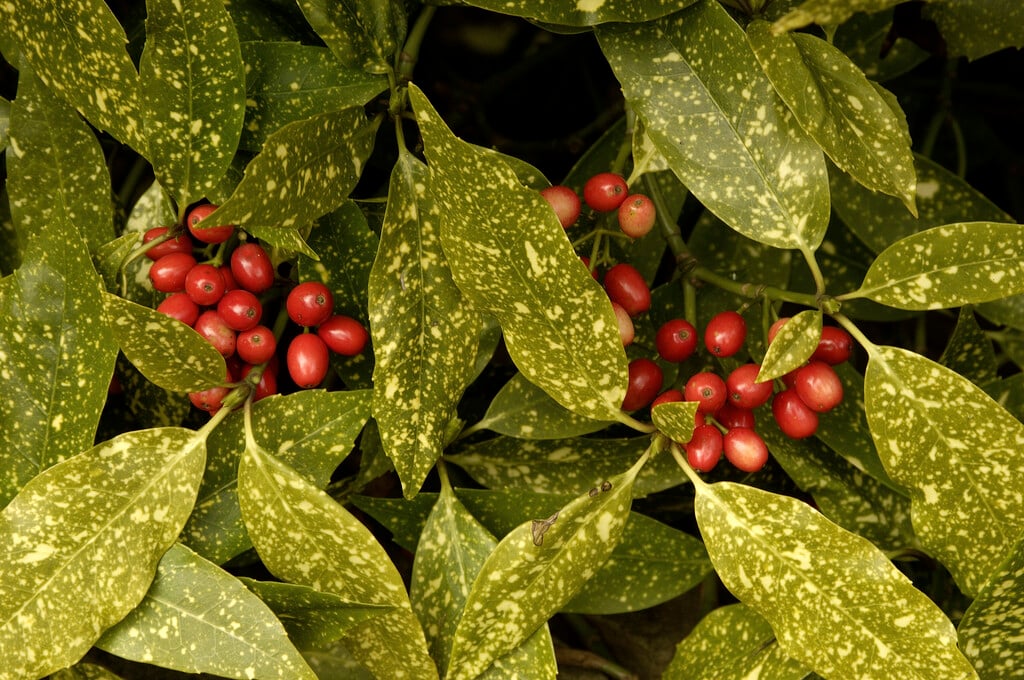
Aucuba japonica 'Gold Dust' (f/v)

RHS Plant Profile
Japanese laurel 'Gold Dust'
Japanese laurel 'Gold Dust' visionspictures.com
Shrubs

A bushy evergreen shrub, to around 2m high. Leaves are thick, glossy and toothed, and olive green speckled with pale yellow. Clusters of small, red-purple flowers are produced in spring; if pollinated, these are followed by bright red berries in late summer and autumn

Position

Full shade, Partial shade

Soil Types

Chalk, Clay, Loam, Sand

Max Height

1.5-2.5 metres

Max Spread

1.5-2.5 metres

Size

Time to Maturity
5–10 years
Max Spread
1.5-2.5 metres
Max Height
1.5-2.5 metres

Growing Conditions

Chalk Clay Loam Sand
Moisture
Moist but well–drained or Well–drained
pH
Acid or Alkaline or Neutral

Position

Full shade Partial shade
Aspect
East–facing or North–facing or West–facing
Exposure
Exposed or Sheltered
Hardiness
H5

Colour & Scent

Season Stem Flower Foliage Fruit
Spring
Summer
Autumn
Winter

Botanical Details

Family
Garryaceae
Native to GB/Ireland
No
Foliage
Evergreen
Habit
Bushy
Potentially harmful
Fruit is ornamental - not to be eaten. Wear gloves and other protective equipment when handling Pets: Fruit is ornamental - not to be eaten - see the HTA guide to potentially harmful plants for further information and useful contact numbers
Genus
Aucuba are dioecious evergreen shrubs with simple, leathery leaves, attractively variegated in many cultivars, and small purple flowers followed on female plants by large glossy red fruit
Name Status
Accepted

How to Grow

Cultivation

Will grow in almost any soil or situation except soil prone to waterlogging. Good for difficult planting positions, tolerant of dry soil, pollution and salt winds. Plant male and female plants together to ensure berries

Propagation

Propagate by semi-ripe cuttings from late summer to autumn

Suggested planting locations and garden types

  • City and courtyard gardens
  • Coastal
  • Cottage and informal garden
  • Low Maintenance
  • Hedging and screens

Pruning

Pruning group 1; trim hedges in spring; shrubs may be renovated by hard pruning in spring

Pests

Generally pest-free

Diseases

May be susceptible to honey fungus