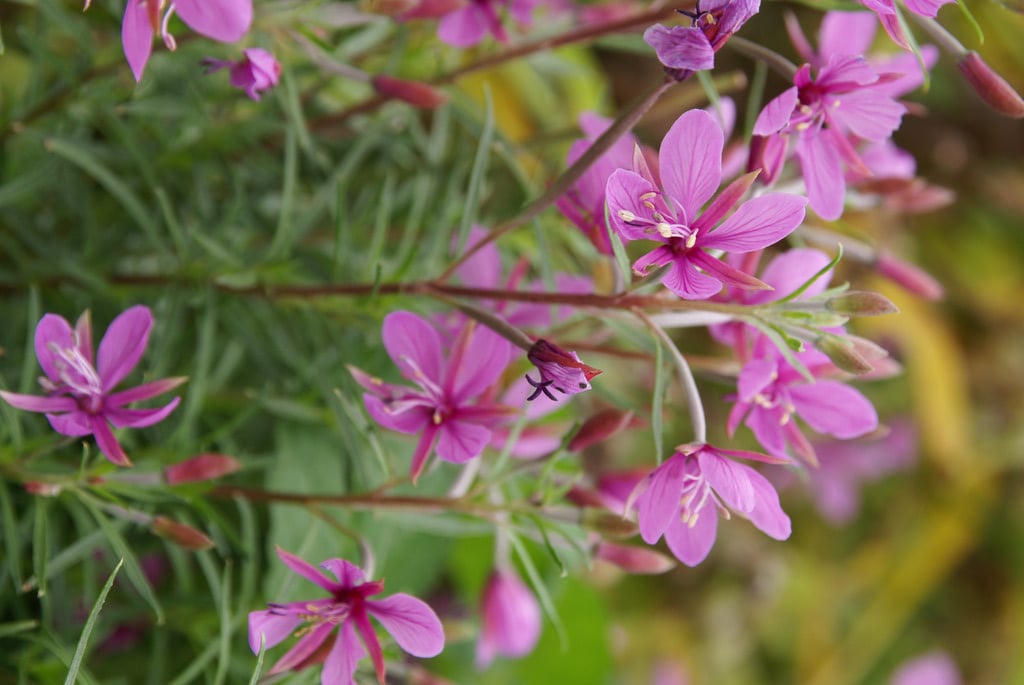
Epilobium dodonaei

RHS Plant Profile
Dodoens' willowherb
Dodoens' willowherb RHS

Other common names

rosemary-leaved willowherb

Synonyms

Chamaenerion palustre misapplied
Epilobium dodonaei
Epilobium rosmarinifolium
Chamaenerion angustissimum
Chamerion dodonaei

Herbaceous Perennial

A spreading perennial with a woody rootstock and upright stems with short, narrow, hairy leaves. Throughout summer loose spires of cup-shaped, purple-pink flowers are produced

Position

Full sun, Partial shade

Soil Types

Chalk, Clay, Loam, Sand

Max Height

0.5-1 metres

Max Spread

0.1-0.5 metres

Size

Time to Maturity
2–5 years
Max Spread
0.1-0.5 metres
Max Height
0.5-1 metres

Growing Conditions

Chalk Clay Loam Sand
Moisture
Moist but well–drained
pH
Acid or Alkaline or Neutral

Position

Full sun Partial shade
Aspect
West–facing or South–facing or East–facing
Exposure
Sheltered
Hardiness
H4

Colour & Scent

Season Stem Flower Foliage Fruit
Spring
Summer
Autumn
Winter

Botanical Details

Family
Onagraceae
Native to GB/Ireland
No
Foliage
Deciduous
Habit
Bushy
Genus
Chamaenerion can be annuals or perennials, sometimes invasive, with erect stems bearing willowy leaves and showy, 4-petalled flowers in terminal racemes
Name Status
Correct

How to Grow

Cultivation

Grows best in humus-rich, moist but well-drained soil in full sun or semi-shade

Propagation

Propagate by seed sown as soon as ripe, or sown in spring; or by division in autumn or spring; or take softwood cuttings from sideshoots in spring

Suggested planting locations and garden types

  • Cottage and informal garden
  • Flower borders and beds
  • Banks and slopes

Pruning

Deadhead to encourage repeat flowering, and prevent self-seeding

Pests

May be susceptible to slugs and snails

Diseases

May be susceptible to powdery mildews and a rust