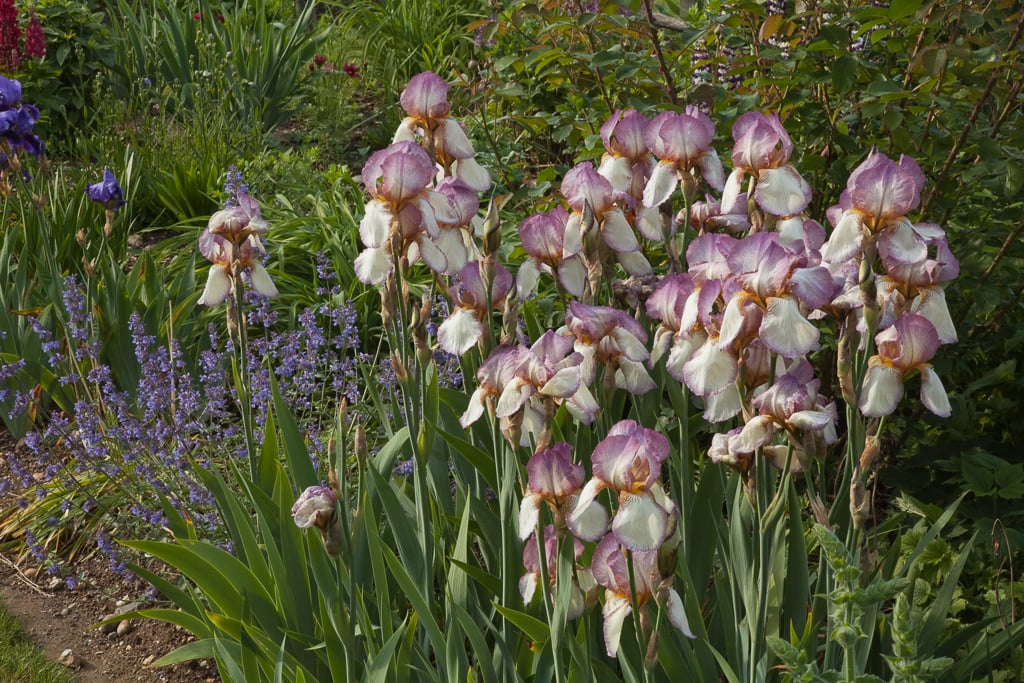
Iris 'Benton Lorna' (TB)

RHS Plant Profile
iris 'Benton Lorna'
iris 'Benton Lorna' John Fielding
Herbaceous Perennial

A rhizomatous perennial to 1m tall with fans of slender grey-green leaves and bearing ruffled creamy-white flowers, the standards heavily marked and veined with purple, the falls edged violet and a golden yellow beard in late spring and early summer

Position

Full sun

Soil Types

Chalk, Loam, Sand

Max Height

0.5-1 metres

Max Spread

0.1-0.5 metres

Size

Time to Maturity
2–5 years
Max Spread
0.1-0.5 metres
Max Height
0.5-1 metres

Growing Conditions

Chalk Loam Sand
Moisture
Well–drained
pH
Acid or Alkaline or Neutral

Position

Full sun
Aspect
South–facing or West–facing or East–facing
Exposure
Sheltered
Hardiness
H7
Drought Resistance
Yes

Colour & Scent

Season Stem Flower Foliage Fruit
Spring
Summer
Autumn
Winter

Botanical Details

Family
Iridaceae
Native to GB/Ireland
No
Foliage
Deciduous
Habit
Clump forming
Potentially harmful
Harmful if eaten. Wear gloves and other protective equipment when handling. Pets: Harmful if eaten. For further information and contact numbers regarding pets, see the HTA guide to potentially harmful plants
Genus
Iris may be rhizomatous or bulbous perennials, with narrow leaves and erect stems bearing flowers with 3 large spreading or pendent fall petals, alternating with 3 erect, often smaller, standard petals, in late winter, spring or early summer
Name Status
Accepted
Horticultural Group
Tall Bearded irises are herbaceous rhizomatous perennials to 70cm or more, with flowers 10-20cm across, bearded on the falls, in late spring and early summer

How to Grow

Cultivation

Grow in well-drained, fertile, neutral to slightly acidic soil in full sun. Do not cover the rhizomes with mulch, or allow other plants to shade them; sun on the rhizomes encourages flowering. Give a high potash feed in spring and divide every three to four years. See also bearded iris cultivation

Propagation

Propagate by division of rhizomes after flowering, from midsummer to late summer; for more advice, see dividing irises

Suggested planting locations and garden types

  • City and courtyard gardens
  • Coastal
  • Cottage and informal garden
  • Cut flowers
  • Flower borders and beds
  • Wall side borders

Pruning

Cut down old flower stems after flowering, and remove any dying foliage in autumn

Pests

May be susceptible to slugs, snails and thrips

Diseases

May be susceptible to aphid-borne viruses, bacterial soft rot and grey moulds; see Iris diseases