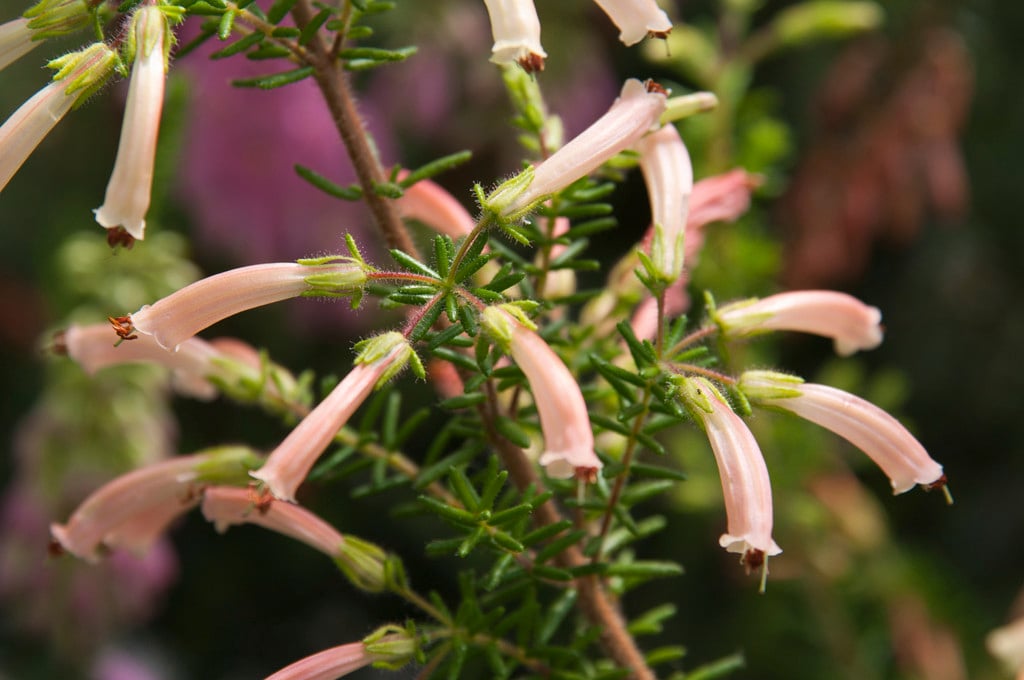
Erica glandulosa

RHS Plant Profile
glandular heath
glandular heath RHS
Shrubs

An evergreen shrub, to 1.5m tall, with both leaves and stems covered in tiny, glandular hairs giving the plant a sticky feel. Curved, tubular, pale pink to pale orange flowers, up to 25mm long, are borne over a long period

Position

Full sun, Partial shade

Soil Types

Loam, Sand

Max Height

1-1.5 metres

Max Spread

0.5-1 metres

Size

Time to Maturity
5–10 years
Max Spread
0.5-1 metres
Max Height
1-1.5 metres

Growing Conditions

Loam Sand
Moisture
Moist but well–drained or Well–drained
pH
Acid or Neutral

Position

Full sun Partial shade
Aspect
South–facing or West–facing
Exposure
Sheltered
Hardiness
H2

Colour & Scent

Season Stem Flower Foliage Fruit
Spring
Summer
Autumn
Winter

Botanical Details

Family
Ericaceae
Native to GB/Ireland
No
Foliage
Evergreen
Habit
Bushy
Genus
Erica can be prostrate or erect, evergreen shrubs with fine, needle-like leaves in whorls, and racemes or panicles of small, bell-shaped or tubular flowers
Name Status
Unresolved
Plant Range
S Africa (Cape)

How to Grow

Cultivation

Grow in well-drained, acid soil in full sun in the mildest localities only; under glass grow in ericaceous potting compost in full light with good ventilation at all times; water freely in the growing season and apply a half strength balanced liquid fertiliser every four weeks, water moderately when not in flower

Propagation

Propagate by seed or by semi-hardwood cuttings

Suggested planting locations and garden types

  • City and courtyard gardens
  • Coastal
  • Cottage and informal garden
  • Patio and container plants

Pests

Generally pest-free

Diseases

May be susceptible to fungal diseases, including honey fungus (rarely), and Phytophthora root rot, in wet conditions