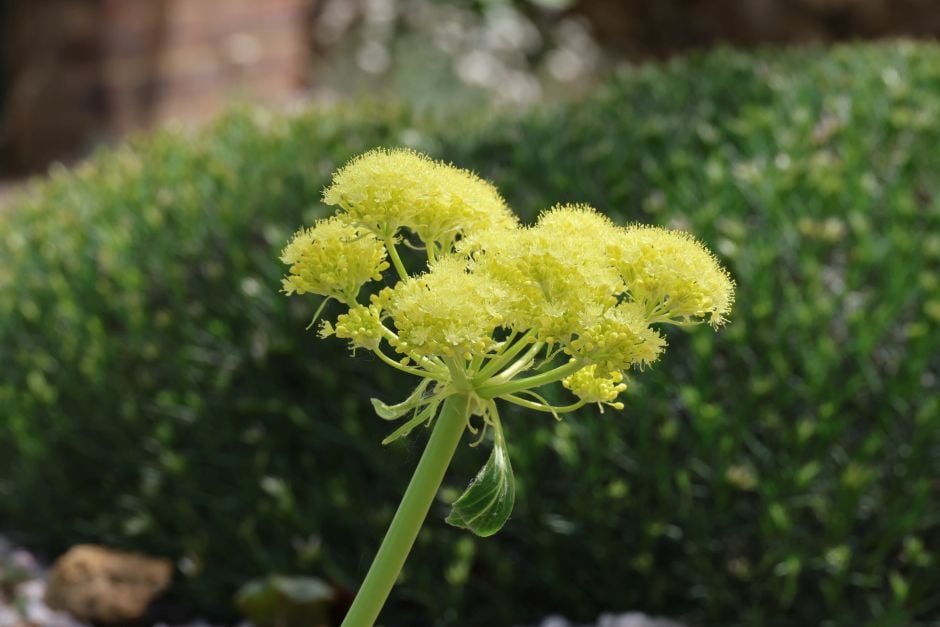
Eriogonum compositum

RHS Plant Profile
arrow-leaf buckwheat
arrow-leaf buckwheat RHS
Herbaceous Perennial Shrubs

A clump-forming, low-growing woody perennial herb or subshrub to around 50cm in height, with oval to heart-shaped grey-green leaves on long, narrow stems. Clusters of small, tubular-shaped butter-yellow to creamy-white fluffy flowers appear from late spring to summer and are very attractive to bees, butterflies and other pollinators. Makes a great addition to a rock or gravel garden or wildlife garden and is drought-tolerant. The deep roots make it an excellent plant for banks and slopes to stabilise the soil and prevent erosion

Position

Full sun

Soil Types

Loam, Sand

Max Height

0.1-0.5 metres

Max Spread

0.5-1 metres

Size

Time to Maturity
1–2 years
Max Spread
0.5-1 metres
Max Height
0.1-0.5 metres

Growing Conditions

Loam Sand
Moisture
Well–drained
pH
Acid or Alkaline

Position

Full sun
Aspect
South–facing or West–facing
Exposure
Sheltered
Hardiness
H4
Drought Resistance
Yes

Colour & Scent

Season StemFlowerFoliageFruit
Spring Cream, White, Yellow Green, Grey, Silver
Summer Cream, White, Yellow Green, Grey, Silver
Autumn Green, Grey, Silver
Winter

Botanical Details

Family
Polygonaceae
Native to GB/Ireland
No
Foliage
Deciduous
Habit
Clump forming
Genus
A genus of evergreen flowering shrubs native to North America, with silvery grey-green foliage and clusters of cotton-ball like pink and white flowers. Grown as food for both humans, livestock and wildlife and used as medicine by some native American tribes
Name Status
Correct
Plant Range
USA (NW to N California)

How to Grow

Cultivation

Grow in well-drained, gritty or sandy soil in full sun. Avoid waterlogging which can cause the roots to rot and protect the crown from cold in winter. Resents being moved and thrives on poor soil so does not need feeding

Propagation

Propagate by seed

Suggested planting locations and garden types

  • Cottage and informal garden
  • Gravel garden
  • Rock garden
  • Wildlife gardens
  • Banks and slopes

Pruning

Cut back to just about the basal foliage in autumn

Pests

May be susceptible to aphids, glasshouse leafhoppers and powdery mildews

Diseases

May be susceptible to crown and root rot