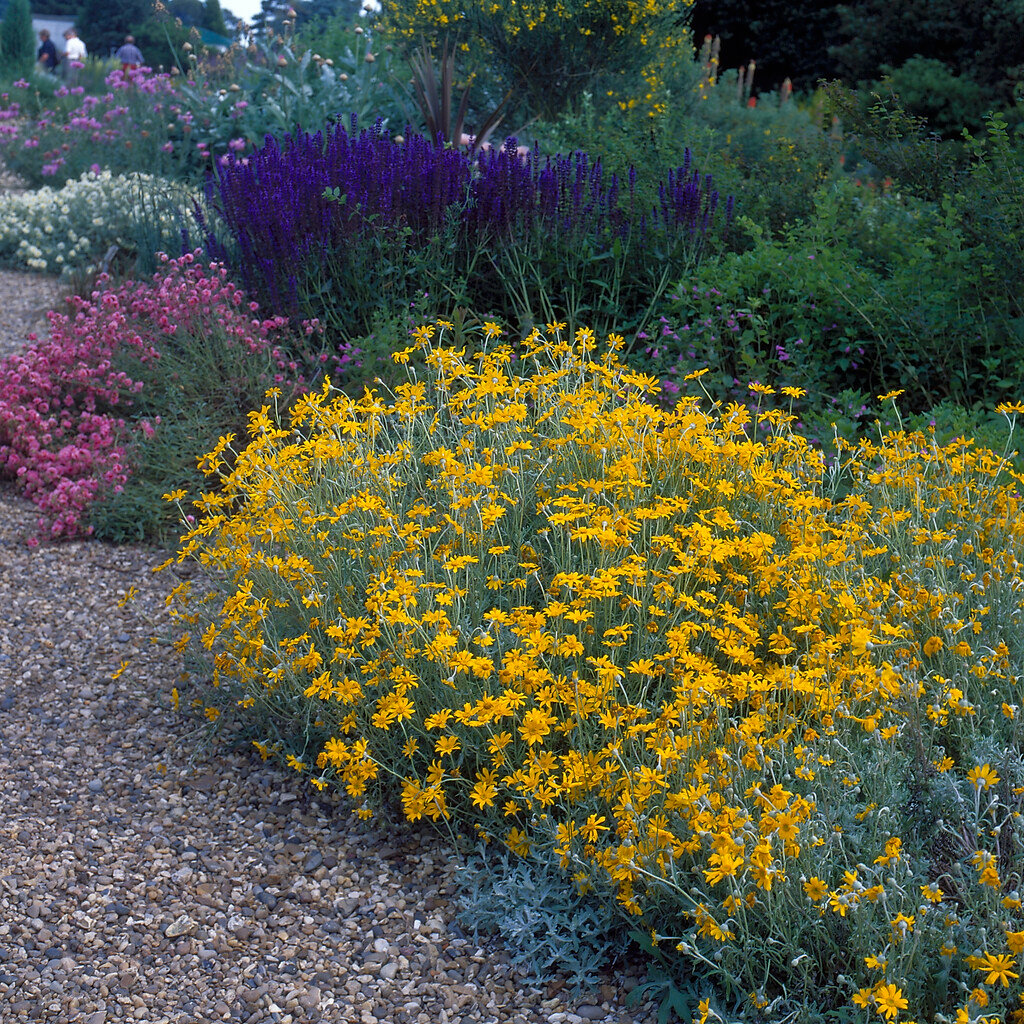
Eriophyllum lanatum

RHS Plant Profile
Oregon sunshine
Oregon sunshine visionspictures.com

Other common names

sunshine flower

Synonyms

Actinella lanata
Bahia lanata

Plants for pollinators
Herbaceous Perennial

A strong-growing, clump-forming herbaceous perennial to a height of 30cm, with silvery-grey green hairy leaves. From late spring to summer, yellow daisies bloom in profusion over a long period

Position

Full sun

Soil Types

Chalk, Loam, Sand

Max Height

0.1-0.5 metres

Max Spread

0.1-0.5 metres

Size

Time to Maturity
1–2 years
Max Spread
0.1-0.5 metres
Max Height
0.1-0.5 metres

Growing Conditions

Chalk Loam Sand
Moisture
Well–drained
pH
Neutral or Alkaline or Acid

Position

Full sun
Aspect
South–facing or West–facing
Exposure
Exposed or Sheltered
Hardiness
H4
Drought Resistance
Yes

Colour & Scent

Season Stem Flower Foliage Fruit
Spring
Summer
Autumn
Winter

Botanical Details

Family
Asteraceae
Native to GB/Ireland
No
Foliage
Deciduous
Habit
Clump forming, Bushy
Genus
Name Status
Correct

How to Grow

Cultivation

Plant in well-drained, soil in full sun. Avoid winter wet - tolerates drought once established, so ideal for gravel garden.

Propagation

Propagate by division in spring or sow seed in autumn outside

Suggested planting locations and garden types

  • Cottage and informal garden
  • Gravel garden
  • Patio and container plants
  • Rock garden
  • Wildlife gardens
  • Banks and slopes
  • Flower borders and beds
  • Garden edging
  • Ground cover

Pruning

After flowering, cut back to keep compact

Pests

Generally pest-free

Diseases

May be susceptible to damage by slugs and snails. Birds may use this plant as nesting material