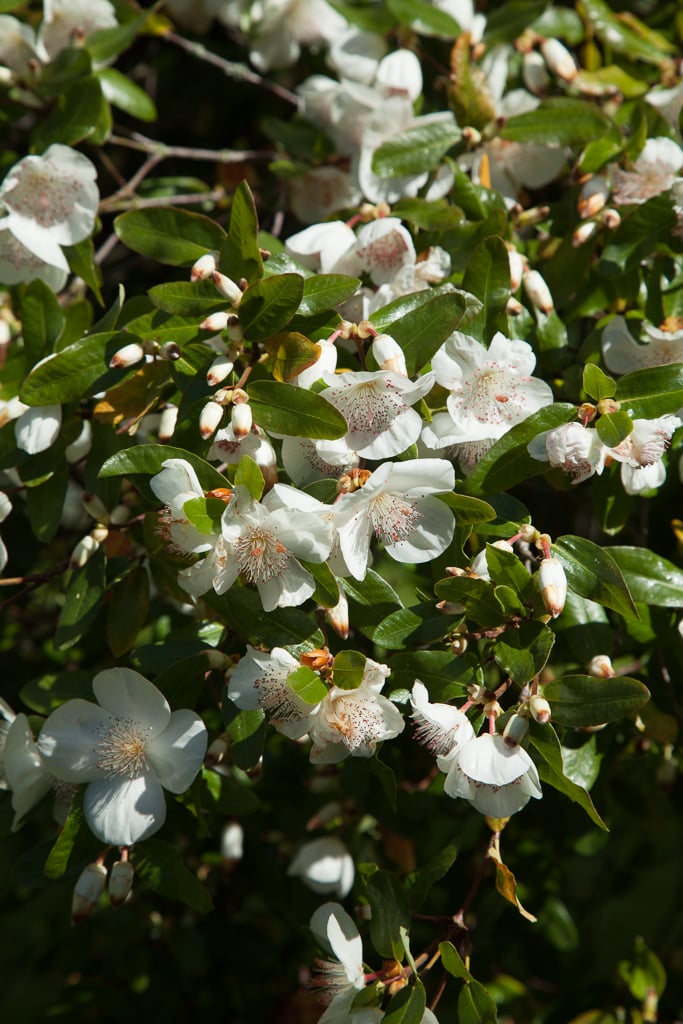
Eucryphia cordifolia

RHS Plant Profile
ulmo
ulmo John Fielding

Other common names

roble de Chile

Trees Shrubs

An evergreen, broad columnar tree or large shrub eventually reaching up to around 15-20m tall. Leathery textured, oblong, dull green leaves with downy grey undersides have shallowly-toothed margins; fragrant, white flowers, 4-5cm across are borne from late summer into autumn

Position

Full sun, Partial shade

Soil Types

Loam, Sand, Clay

Max Height

Higher than 12 metres

Max Spread

4-8 metres

Size

Time to Maturity
20–50 years
Max Spread
4-8 metres
Max Height
Higher than 12 metres

Growing Conditions

Loam Sand Clay
Moisture
Moist but well–drained
pH
Acid or Neutral

Position

Full sun Partial shade
Aspect
South–facing or West–facing
Exposure
Sheltered
Hardiness
H4

Colour & Scent

Fragrance Flower
Season Stem Flower Foliage Fruit
Spring
Summer
Autumn
Winter

Botanical Details

Family
Cunoniaceae
Native to GB/Ireland
No
Foliage
Evergreen
Habit
Columnar upright, Bushy
Genus
Eucryphia can be evergreen or deciduous shrubs or trees, with simple or pinnate leaves and solitary bowl-shaped white flowers in the leaf axils in summer or autumn
Name Status
Correct
Plant Range
Central Chile to SW Argentina

How to Grow

Cultivation

Grow in a position sheltered from cold, drying winds in full sun or partial shade, but with the roots shaded from hot sun and in fertile, humus-rich, moist but well-drained neutral or acidic soil

Propagation

Propagate by semi-ripe cuttings in summer, and overwinter young plants in a cool greenhouse

Suggested planting locations and garden types

  • Coastal
  • Low Maintenance
  • Hedging and screens

Pests

Generally pest-free

Diseases

May be susceptible to honey fungus