Tuberaria guttata
spotted rock rose
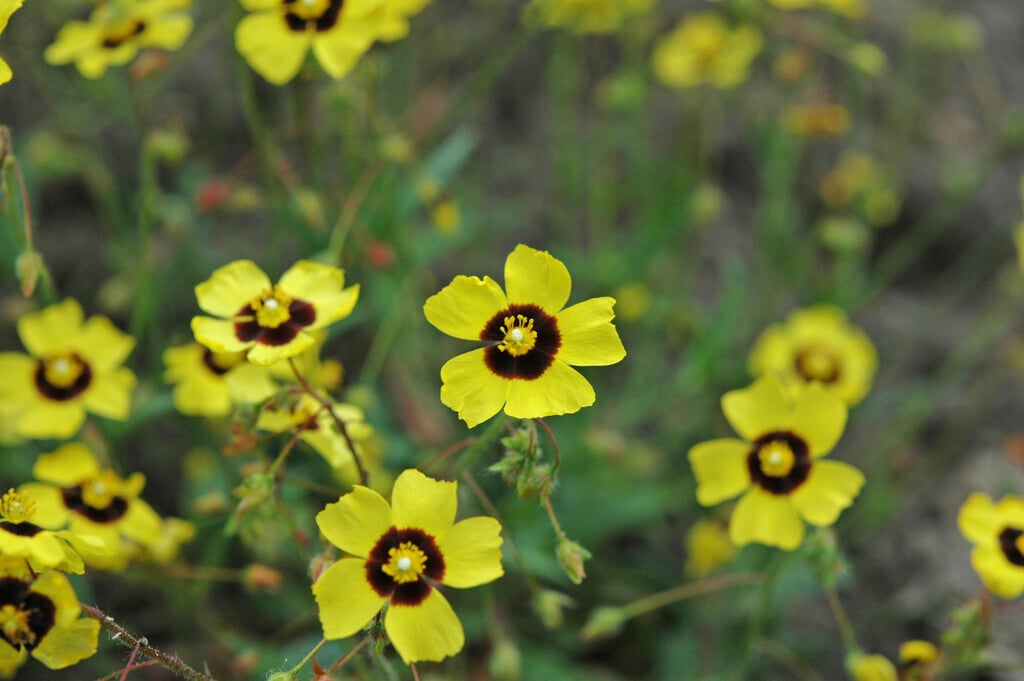
Found in a few scattered coastal locations, this native annual has leafy stems up to 30cm long, upright or sprawling, developing from a basal rosette. Striking, bowl-shaped, yellow flowers, with a variable red-brown blotch at the base of each petal, develop in late spring and early summer
Size
Ultimate height
0.1–0.5 metresTime to ultimate height
1 yearUltimate spread
0.1–0.5 metresGrowing conditions
Moisture
Well–drainedpH
Acid, Alkaline, NeutralColour & scent
| Stem | Flower | Foliage | Fruit | |
| Spring | Red Yellow | Green | ||
|---|---|---|---|---|
| Summer | Red Yellow | Green | ||
| Autumn | Green | |||
| Winter |
Position
- Full sun
Aspect
South–facing or West–facing
Exposure
Exposed or ShelteredDrought resistance
Yes Hardiness
H3Botanical details
- Family
- Cistaceae
- Native to GB / Ireland
- Yes
- Foliage
- Deciduous
- Habit
- Tufted
- Genus
A genus of around 12 species of annual and perennial flowering plants, native to southern and western Europe and found in dry, stony areas in coastal locations. The dark green leaves form rosettes and yellow, five-petalled flowers with dark red blotches appear in summer
- Name status
Correct
How to grow
Cultivation
Naturally found on dry, sparsely covered ground near the sea. Needs well-drained, acid to neutral soil in a sunny spot
Propagation
Propagate by seed
Suggested planting locations and garden types
- Coastal
- Cottage and informal garden
- Gravel garden
- Rock garden
- Banks and slopes
Pruning
No pruning required
Pests
Generally pest-free
Diseases
Generally disease-free
Get involved
The Royal Horticultural Society is the UK’s leading gardening charity. We aim to enrich everyone’s life through plants, and make the UK a greener and more beautiful place.