
Size
Ultimate height
0.1–0.5 metresTime to ultimate height
1–2 yearsUltimate spread
0.1–0.5 metresGrowing conditions
Moisture
Well–drainedpH
Alkaline, NeutralColour & scent
| Stem | Flower | Foliage | Fruit | |
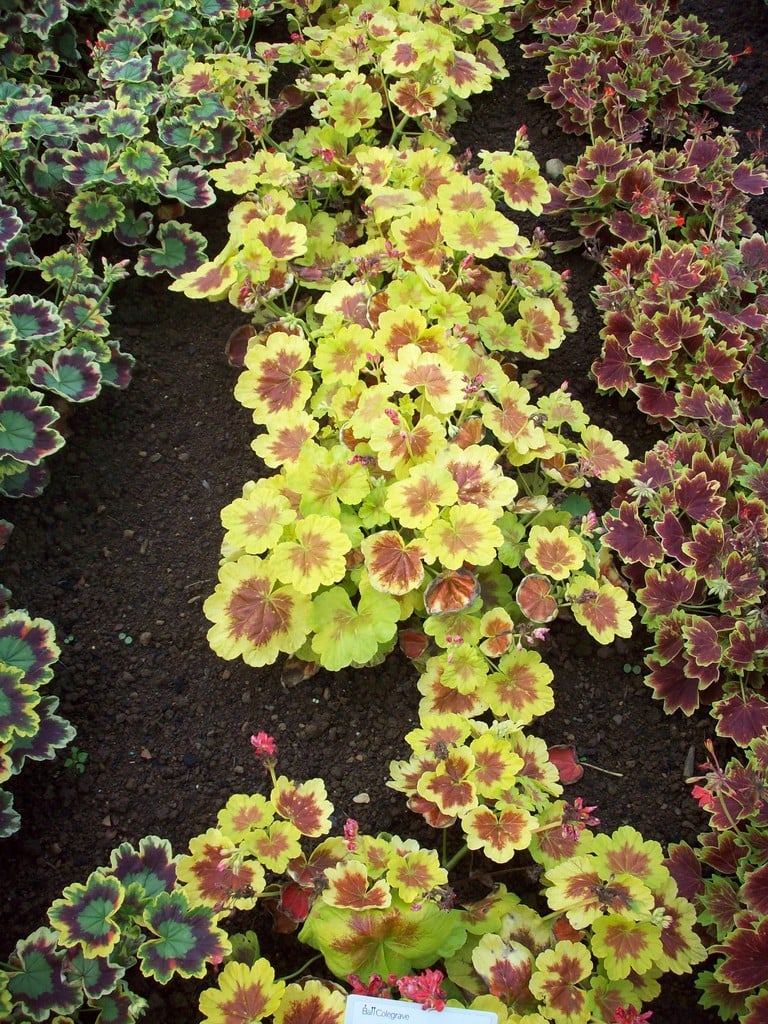
| Spring | Orange Red | Bronze Gold | ||
|---|---|---|---|---|
| Summer | Orange Red | Bronze Gold | ||
| Autumn | Bronze Gold | |||
| Winter | Bronze Gold |
Position
- Full sun
Aspect
South–facing or West–facing or East–facing
Exposure
Sheltered Hardiness
H1CBotanical details
- Family
- Geraniaceae
- Native to GB / Ireland
- No
- Foliage
- Evergreen
- Habit
- Bushy
- Genus
Pelargonium can be perennials, sub-shrubs or shrubs, sometimes succulent and mostly evergreen, with palmately lobed or pinnately divided leaves and clusters of slightly irregular, 5-petalled flowers
- Name status
Accepted
- Horticultural Group
- Dwarf pelargoniums are compact Zonal types, a little larger than Miniatures, and growing to 20cm, with single or more typically double flowers; well suited to containers
How to grow
Cultivation
Requires frost-free conditions. Feed with a high potash fertiliser during the growing season to encourage flowering. See pelargonium cultivation
Propagation
Propagate by cuttings in spring or summer
Suggested planting locations and garden types
- City and courtyard gardens
- Mediterranean climate plants
- Patio and container plants
Pruning
Deadhead to encourage more flowers
Pests
Generally pest-free, but may be susceptible to aphids
Diseases
Generally disease-free, but may be susceptible to pelargonium rust and pelargonium viruses
Get involved
The Royal Horticultural Society is the UK’s leading gardening charity. We aim to enrich everyone’s life through plants, and make the UK a greener and more beautiful place.