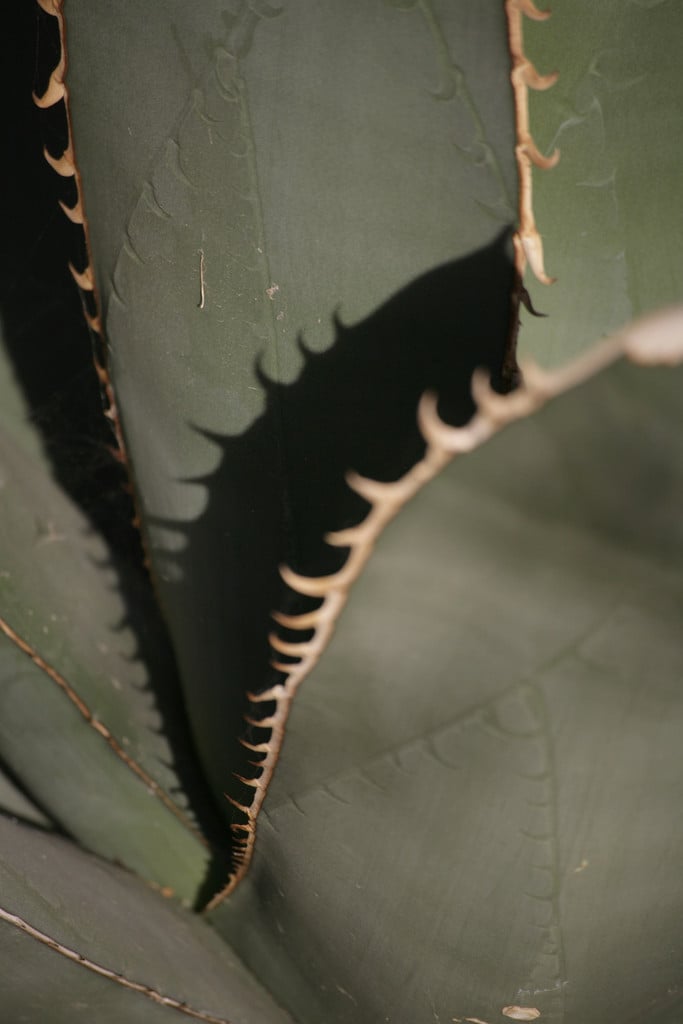
Agave titanota

RHS Plant Profile
chalk agave
chalk agave RHS
Award of Garden Merit
Cactus Succulent

A medium-sized, evergreen, succulent plant, which forms a solitary rosette when young, but may produce offsets when mature. Leaves have ferocious-looking, curved and twisting light-brown, marginal spines, the bases of which often fuse along the leaf margins. There is also a long twisting spine at the leaf-tip. The plant is monocarpic and dies after flowering and setting seed. The flowers are yellow and are produced on a spike 3-6m in height

Position

Full sun

Soil Types

Loam, Sand

Max Height

4-8 metres

Max Spread

0.5-1 metres

Size

Time to Maturity
10–20 years
Max Spread
0.5-1 metres
Max Height
4-8 metres

Growing Conditions

Loam Sand
Moisture
Well–drained
pH
Acid or Alkaline or Neutral

Position

Full sun
Aspect
South–facing or West–facing
Exposure
Sheltered
Hardiness
H1C

Colour & Scent

Season Stem Flower Foliage Fruit
Spring
Summer
Autumn
Winter

Botanical Details

Family
Asparagaceae
Native to GB/Ireland
No
Foliage
Evergreen
Habit
Bushy
Potentially harmful
Skin irritant. Wear gloves and other protective equipment when handling. Pets (dogs, cats): harmful if eaten. For further information and contact numbers regarding pets, see the HTA guide to potentially harmful plants
Genus
Agave can be perennial or monocarpic succulents, forming rosettes of usually rigid, fleshy, spiny-edged leaves, with funnel-shaped flowers in racemes or panicles often much taller than the rosettes
Name Status
Correct

How to Grow

Cultivation

Under glass, grow in a sharply-draining, peat-free, loam-based compost with extra sharp sand, or a proprietary, peat-free cactus compost in full sunlight. Water freely during the growing season from spring to autumn but allowing the compost to dry out before watering again. Water more sparingly in winter when the plant is dormant. See houseplant cacti and succulent cultivation for further information

Propagation

Propagate by seed in spring at 21°C or from offsets in summer

Suggested planting locations and garden types

  • Sub-tropical
  • Patio and container plants

Pruning

No pruning required

Pests

May be susceptible to scale insects

Diseases

Generally disease-free but may be susceptible to root rot in wet soils